
Get a Quote


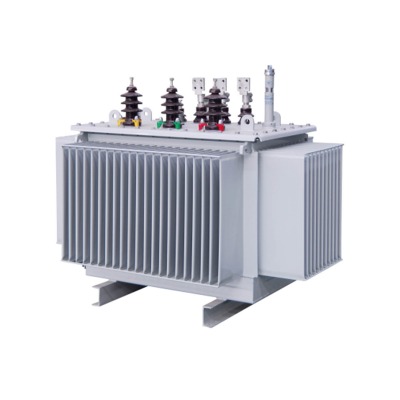
If a transformer raises the voltage (step-up), it will reduce the current by roughly the same ratio, while the power stays approximately the same (minus losses). This is the practical rule used in power grids and most AC power systems.
For an ideal transformer: V increases, I decreases, and P ≈ constant. In real transformers, some power is lost as heat and magnetizing effects, so output power is slightly lower than input power.
A transformer transfers energy through a changing magnetic field. The turns ratio sets how voltage and current scale between primary and secondary windings.
The key equations are: Vs/Vp = Ns/Np and Is/Ip = Np/Ns. Power is approximately conserved: Pout ≈ Pin, so V × I stays roughly constant.
| Quantity | Step-up effect (ideal) | Why |
|---|---|---|
| Voltage (V) | Increases | Set by turns ratio Ns/Np |
| Current (I) | Decreases | Inverse scaling keeps V×I roughly constant |
| Apparent power (VA) | ~Same | Energy transfer through the core is conserved (ideal) |
| Real power (W) | Slightly lower at output | Losses (copper I²R, core losses) reduce efficiency |
Numbers make the rule obvious: when voltage goes up, current goes down—so long as the transformer is supplying a load.
Suppose a transformer steps 120 V up to 1200 V (a 10:1 voltage ratio) and delivers 600 W to a load. Output current is Iout = 600 W / 1200 V = 0.5 A. Input current (ideal) is Iin = 600 W / 120 V = 5 A. The voltage increased by 10× and the current decreased by 10×.
If you transmit 10 kW at 1 kV, current is 10 A. Transmit the same 10 kW at 10 kV, current is 1 A. Copper loss is proportional to I², so going from 10 A to 1 A cuts resistive loss by (10²) = 100× for the same wire resistance.
A common misconception is that stepping up voltage “creates” extra power. It does not. A transformer trades voltage for current.
In practice, Pout = η × Pin, where efficiency η is typically high for well-designed power transformers. The difference is lost mainly as:
A transformer does not change AC frequency. If the input is 60 Hz, the output is 60 Hz.
“Voltage up, current down” describes how a transformer behaves while supplying a load within its design limits. Outside that, outcomes change quickly.
Even with nothing connected to the secondary, the primary draws a small current to magnetize the core. This magnetizing current is not zero, but it is typically much smaller than rated load current.
Transformers are rated in VA or kVA. A step-up transformer can still be overloaded if the secondary current (or primary current) exceeds the winding and thermal design limits. Overload raises I²R heating and can rapidly damage insulation.
If you need a fast rule to apply in design or troubleshooting, use this: Step-up voltage by a factor of k → step-down current by a factor of k, and expect roughly the same power (minus losses).
Bottom line: if a transformer raises the voltage it will reduce the available current on the secondary in proportion to the step-up ratio, which is exactly why high-voltage transmission is efficient.
1.Types of High Voltage Switchgear The main categories of high voltage switchgear include Air-Insula...
View More1. Working Principle Oil-immersed transformers play a pivotal role in modern electrical power system...
View More1. Advantages of Distribution Dry Type Transformers Distribution dry type transformers have become i...
View More
 中文简体
中文简体 русский
 Español
 عربى
عربى