
Get a Quote


A transformer enquiry often arrives as a simple line in an email: “Please quote a transformer for this project.” In our experience, that first line rarely contains enough detail for a useful answer. The real work begins when we understand the load, the network, the installation space, and the standards the project must satisfy.
This guide covers the practical information needed for a transformer selection. It is not a design manual, but it reflects the questions we ask most often when helping customers move from an idea to a reliable specification.
Rated power is important, but it is not the whole story. A transformer that supplies a few motors with frequent starts has different demands from one feeding a data centre, a rectifier bank, or a small distribution board with mostly lighting loads. We need to know what the transformer supplies and how that load behaves through the day.
Useful information includes the continuous load, short-term peaks, starting currents, harmonic-producing equipment, and any planned expansion. If the project has a load profile or a maximum demand study, share it. If not, a clear description of the process and the largest motors or drives is still valuable. A little extra information here often prevents an oversized unit, an undersized one, or an unpleasant surprise during commissioning.
The electrical data sheet is the backbone of the enquiry. We need the system voltage, phase, frequency, primary and secondary voltage, and the required capacity in kVA. Beyond those basics, the vector group, impedance, tap range, insulation level, neutral arrangement, and temperature rise all influence how the transformer behaves in service.
It also helps to state the short-circuit level at the point of connection and the protection philosophy. These details affect impedance selection and coordination with upstream and downstream equipment. If the transformer will run in parallel with existing units, include their vector groups, impedance, and tap settings as well.
| Information | What to state | Why it matters |
|---|---|---|
| Power and load profile | Rated kVA, continuous and peak load, future margin | Helps avoid oversizing, undersizing, and excessive losses |
| Voltage and frequency | HV and LV voltage, phase, frequency, tap range | Matches the transformer to the network and connected equipment |
| Vector group and neutral | Connection symbol, neutral arrangement, grounding method | Affects single-phase loading, protection, and fault behaviour |
| Impedance and fault level | Required percent impedance, short-circuit current | Supports protection coordination and motor starting performance |
| Insulation and temperature | Insulation level, temperature rise, ambient conditions | Defines safety margins and expected service life |
| Cooling and losses | Cooling method, no-load and load loss targets | Influences energy cost, ventilation, and noise |
| Application and duty | Motors, harmonics, cyclic duty, renewable or industrial use | Guides thermal design and special performance requirements |
| Standards and testing | IEC, GB, ANSI/IEEE or project specification, test reports | Confirms acceptance criteria and documentation scope |
For many 10 kV and 20 kV distribution projects, a standard oil-immersed distribution transformer is a practical reference point before special requirements are added.
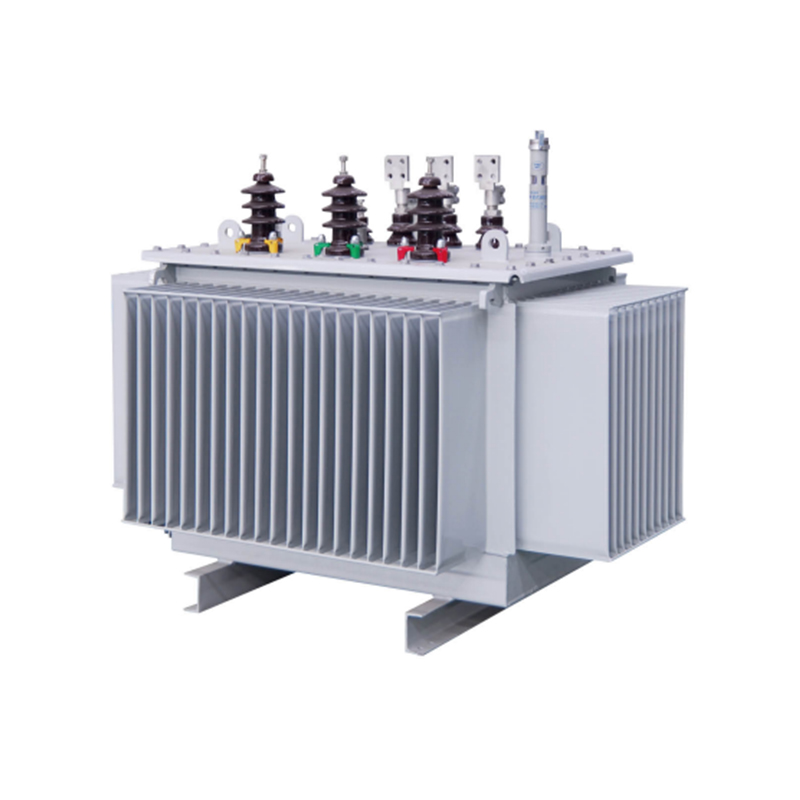 10 kV/20 kV S11/S13/S20/S22 Oil-Immersed TransformersA reference option for standard 10 kV and 20 kV distribution projects, with fully sealed oil-immersed designs and S11/S13/S20/S22 parameter tables.View Product →
A transformer is not selected in isolation. It has to fit into a room, a yard, a compact substation, or an underground enclosure. We ask whether the installation is indoor or outdoor, and whether the site has altitude, humidity, dust, corrosive atmosphere, or seismic requirements. Ambient temperature and ventilation are especially important because they affect loading and insulation life.
Physical details matter too: available footprint, floor loading, clearances, cable or busbar entry, lifting access, and noise limits near occupied areas. For indoor electrical rooms, fire safety and the presence of oil often decide whether a dry-type unit is more appropriate. For outdoor distribution, oil-immersed and prefabricated solutions may be easier to maintain and protect.
Where oil is undesirable and the installation is indoors, an epoxy-cast dry-type transformer is often a sensible starting point for discussion.
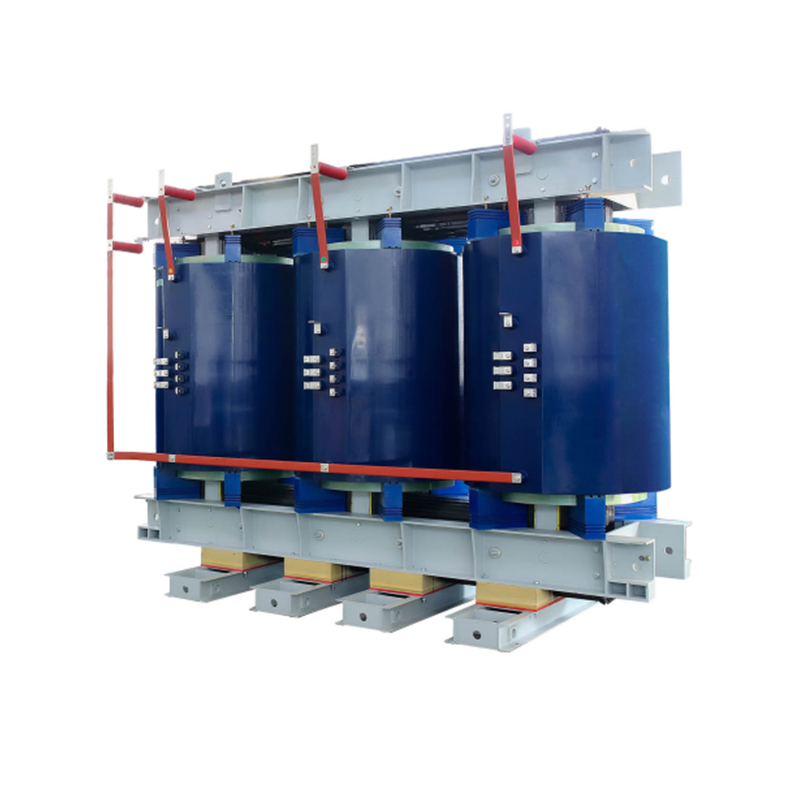 SC10 Epoxy-Cast Dry-Type Transformer SeriesOil-free epoxy-cast dry-type transformer for indoor industrial and civil applications where safety and environmental protection matter, with capacities from 800 to 25000 kVA.View Product →
We also need to understand how the transformer will be protected and monitored. This includes the protection scheme, current transformers, relays, temperature sensors, fan controls, alarm contacts, and any communication requirements. For oil-immersed units, details such as pressure relief, oil level indication, and Buchholz protection may be relevant. For dry-type units, winding temperature monitoring and cooling control are common points to confirm.
Interface information is just as practical. Will the transformer connect by cable or busbar? What termination arrangements are required? Is there a need for surge protection, neutral earthing equipment, or a specific degree of enclosure protection? These details are easier to resolve at the quotation stage than on site.
Most projects refer to a standard or a client specification. State whether the transformer should follow IEC 60076, GB 1094, ANSI/IEEE C57.12.00, or another project-specific document. This affects design details, test requirements, nameplate data, and the documentation package.
Ask for the test plan you expect: routine tests, type test reports, impulse tests where applicable, temperature-rise records, loss measurements, and sound-level data. Drawings, outline dimensions, terminal diagrams, and operation and maintenance manuals should also be part of the information exchange. If you are comparing offers, make sure each supplier is working to the same standard and the same documentation scope. You can see how we approach routine checks on our quality page.
Finally, the practical commercial details complete the picture. How many units are required? Where will they be delivered, and what transport limits apply? Is there a target delivery date, a site access restriction, or a need for lifting and installation guidance? Packing requirements and storage conditions can matter for projects with long construction programmes.
Also clarify commissioning support, spare parts, warranty terms, and any special labelling or documentation language. These points are not electrical design issues, but they influence cost, lead time, and how smoothly the equipment reaches service. If you already have a data sheet, single-line diagram, layout drawing, or load list, send it through our contact page and we can help identify the gaps.
Before requesting a quotation, gather the following into one package:
A clear brief does not need to be long. It needs to be specific enough for the manufacturer to ask fewer questions and for the project team to compare options on the same basis. That is usually the fastest route to a transformer that fits the job, rather than one that merely fits the kVA figure.
1.Types of High Voltage Switchgear The main categories of high voltage switchgear include Air-Insula...
View More1. Working Principle Oil-immersed transformers play a pivotal role in modern electrical power system...
View More1. Advantages of Distribution Dry Type Transformers Distribution dry type transformers have become i...
View More
 中文简体
 русский
 Español
 عربى
