
Get a Quote


High voltage switchgear rarely fails without warning. It usually gives notice first — a joint that runs a few degrees warmer each quarter, a faint discharge that only appears when humidity climbs, a breaker whose closing time has drifted by a few milliseconds. Condition monitoring is the discipline of catching those notices early, while the fix is still a maintenance task rather than an outage report.
What follows is a practical view of what is worth measuring, how the sensors behave once they are inside a real compartment, and how to build a monitoring scheme that fits the switchgear you already operate.
Condition monitoring for high voltage switchgear is often described as a sensor package, but in practice it is a short list of questions asked continuously. Is anything getting too hot? Is the insulation beginning to break down? Is the switching mechanism still behaving the way it did on commissioning day? Is the insulating medium still intact? Each question has its own measurement technology, its own installation constraints, and its own failure signature.
| Parameter | Typical sensing method | Warning sign it reveals |
|---|---|---|
| Contact and busbar temperature | Fibre-optic, wireless or infrared sensors | Rising trend at joints and tulip contacts, often weeks before visible damage |
| Partial discharge | TEV, ultrasonic or UHF couplers | Bursts that track humidity or load, an early indicator of insulation ageing |
| SF6 density and moisture | Gas density monitors, dew-point sensors | Slow pressure loss or moisture ingress after seal wear |
| Breaker travel and timing | Rotary or linear transducers, auxiliary contacts | Drift in opening and closing times, damped travel curves |
| Coil and motor current | Hall-effect or shunt-based sensors | Rising coil current, sluggish spring-charging motor |
| Cable termination temperature | Fibre-optic or surface-mounted sensors | Local hotspots at stress cones and lugs |
| Load current and power quality | Current transformers, power meters | Overload patterns and harmonic stress that accelerate ageing |
Not every installation needs all seven. A distribution substation with modest load and regular inspections may only need temperature and partial discharge coverage, while a heavily loaded industrial switchboard with limited access is usually worth instrumenting more fully.
Switchgear sits at the point where the network can be reconfigured, isolated and protected, which makes it one of the few assets where a single failure can take out an entire busbar section. The direct repair cost is rarely the largest item on the bill. Lost production, restart sequences, damaged downstream equipment and the safety implications of an internal arc all arrive together, and they arrive without an appointment.
Thermal and insulation faults also develop slowly. A loose busbar joint may take months to reach a dangerous temperature, and a void inside a cast resin insulator may discharge intermittently for a year before it tracks across the surface. That slow progression is precisely what makes monitoring useful: it converts a hidden process into a trend line that can be reviewed and acted on during a planned shutdown.
Thermal problems are the most frequent and most preventable issue in medium and high voltage switchgear. Contact resistance rises with vibration, repeated operation and oxidation, and every extra milliohm shows up as heat. In enclosed compartments that heat has nowhere to go, so a small defect can escalate quietly.
Fibre-optic sensors remain the reference solution for direct contact measurement because they are immune to electromagnetic interference and do not introduce metallic parts into the high-field region. Wireless battery sensors are easier to retrofit but need a battery replacement plan, while infrared windows work well for periodic scans but tell you nothing between visits. Whichever route you take, the value comes from a stable baseline and a comparison over time, not from a single reading.
Partial discharge is the sound of insulation in decline. It appears as internal voids in cast resin, surface tracking along contaminated insulators, corona at sharp edges, or floating particles inside gas-filled compartments. Because each of these produces a different signature, most monitoring systems combine several detection methods rather than relying on one.
Transient earth voltage sensors are inexpensive and easy to fit on the enclosure, ultrasonic sensors are good at locating surface activity, and UHF couplers offer sensitivity inside gas-insulated compartments. The practical difficulty is never detection alone but separation of real discharge from background noise produced by drives, welding equipment and other nearby loads. Modern systems handle this by correlating phase, amplitude and repetition rate, and by comparing readings taken at similar load and humidity conditions.
Online monitoring has a clear advantage here: partial discharge is intermittent, and a periodic test that happens to fall on a dry, cool day may record nothing at all.
Circuit breakers are the moving part of the installation, and most of their failures begin mechanically. Travel curve analysis shows whether the mechanism is still delivering the speed and damping it was designed for, and trip coil current signatures reveal armature sticking or coil degradation long before a refusal to trip. Spring-charging motor current tells you about lubrication and bearing condition, while an operations counter keeps maintenance intervals honest.
These electrical and mechanical measurements are worth pairing with gas density monitoring on SF6 designs. A breaker that interrupts fault current correctly but has lost a little pressure is still a risk waiting for the next fault.
Periodic inspection remains necessary — nothing replaces a visual check and a torque check — but it samples the year at a handful of moments. Continuous monitoring covers the gaps. It tends to justify its cost in a few recognisable situations:
A hybrid approach is often the most sensible: continuous temperature and partial discharge monitoring, plus a planned annual inspection that uses the recorded trends to decide where to look first.
A compact ring main unit on a city distribution loop needs a different package from a metal-enclosed switchgear lineup in a steel plant. For ring main units, the priorities are usually cable termination temperature, partial discharge across the compact insulation system, and gas or vacuum integrity, all reported through a small number of channels. For larger lineups, zone-by-zone temperature coverage and breaker diagnostics carry more weight, and the data volume grows accordingly.
The most reliable results come from designs where sensors are part of the switchgear architecture rather than an accessory added afterwards. Working through our high voltage switchgear range, we plan sensor positions, wiring routes and communication ports at the same stage as the busbar and compartment layout.
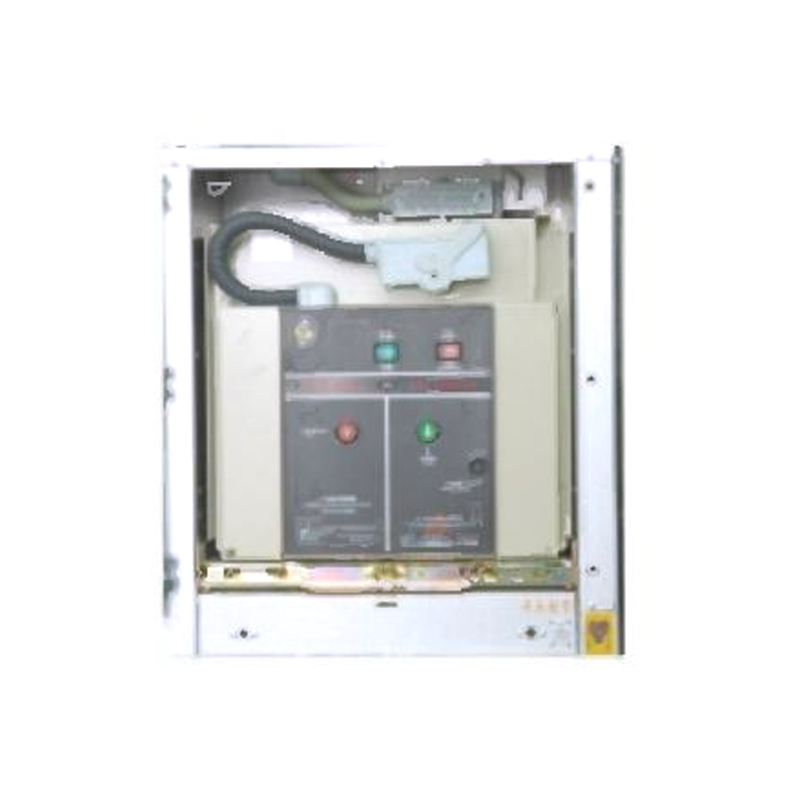 KYN28A-24 24kV Armored Removable Metal-Enclosed SwitchgearIndoor 24kV metal-enclosed switchgear with vacuum circuit breakers and mechanical interlocking, relevant where sensor positions and wiring are planned with compartment layout.View Product →
 Intelligent Indoor Medium-Voltage Box TransformerModular indoor box transformer with high-voltage, transformer and low-voltage rooms, useful where compact medium-voltage supply and simplified deployment are required.View Product →
Several small decisions determine whether a monitoring system survives its first five years. Fibre-optic leads need a route that respects minimum bend radius and keeps them clear of moving parts; a cable tie in the wrong place will do more damage than the sensor prevents. Partial discharge couplers should be mounted with consistent orientation so that readings from different panels can be compared. Sensor addressing and tagging deserve attention on day one, because a trend is worthless if nobody can tell which compartment it belongs to.
Commissioning matters just as much. Capture a baseline at known load and ambient conditions, record the settings, and resist the temptation to set alarm thresholds too tight. Early thresholds generate nuisance trips, nuisance trips generate ignored alarms, and ignored alarms defeat the entire investment.
Monitoring design is easiest when the same team understands the insulation system and the data path. In our work on dry-type and oil-immersed transformers, reactors and switchgear, that has meant treating sensors as part of the electrical design from the start, with dielectric clearances and compartment layout reviewed together rather than separately.
If you are specifying new switchgear, retrofitting an existing lineup, or simply wondering whether the readings on an older panel mean anything, our engineers are glad to look at the drawings with you and suggest a scheme that matches the site rather than the catalogue. You can talk to our team at any stage of the project.
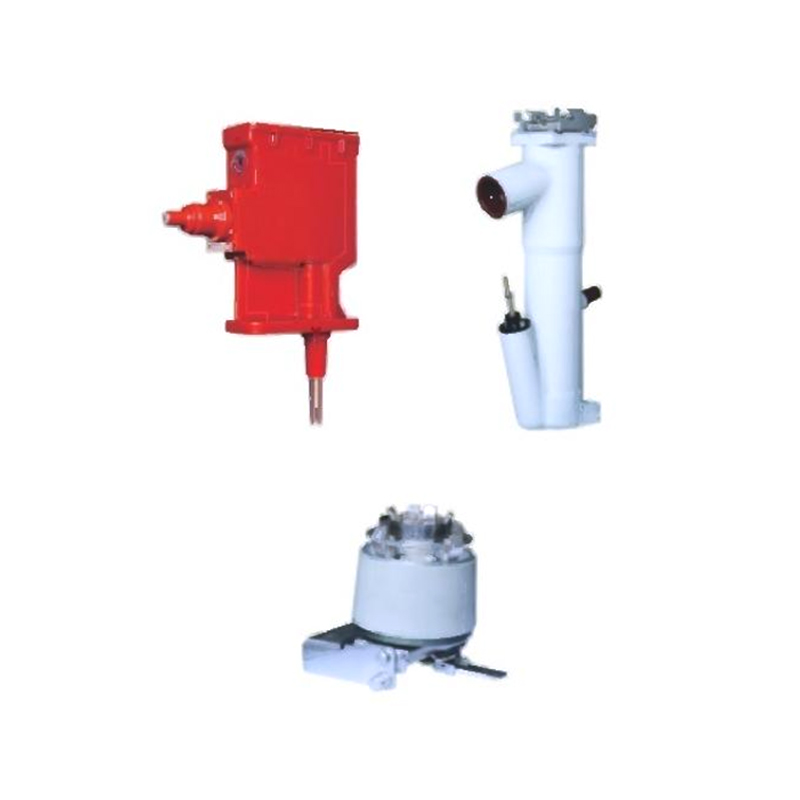 GTXGN-12 Solid Insulation Intelligent Ring Main UnitMaintenance-free 12/24kV ring main unit using solid insulation and vacuum technology, relevant for compact distribution schemes and condition-monitoring discussions.View Product →
Condition monitoring is not about collecting data. It is about knowing, with reasonable confidence, that the switchgear will still operate when it is asked to — and having enough warning to act before it doesn't.
1.Types of High Voltage Switchgear The main categories of high voltage switchgear include Air-Insula...
View More1. Working Principle Oil-immersed transformers play a pivotal role in modern electrical power system...
View More1. Advantages of Distribution Dry Type Transformers Distribution dry type transformers have become i...
View More
 中文简体
 русский
 Español
 عربى
