
Get a Quote


Talk to anyone who has spent years beside a substation, and you quickly learn that environmental protection in the transformer world is rarely about slogans. It shows up in load-loss figures on a routine test report, in whether a unit can be taken apart and recycled at the end of its life, and in what happens on the day a tank seal finally gives way. For the engineers, project managers and procurement teams who specify distribution equipment, these details decide whether a project genuinely earns the word green or simply wears it.
This guide walks through the practical side of environmental protection for electrical transformers: where the real environmental burden sits, how the main design routes compare, and what is worth checking before a purchase order is signed.
A transformer does not burn fuel, and it does not discharge process water. Its environmental footprint is almost entirely indirect, which is exactly why it is so easy to overlook. Over a service life of twenty-five to thirty years, the energy consumed by core and winding losses usually dwarfs everything else the unit will ever be responsible for, including the steel, copper and insulation it is built from.
No-load loss runs every hour of every day, whether a factory is at full production or standing idle over a public holiday. Multiply that by a fleet of thousands of units and the figures turn into national statistics. Regulators have responded accordingly: the EU Ecodesign requirements, the United States Department of Energy standards for distribution transformers, and China's GB 20052 efficiency grades all push minimum performance steadily upward.
Losses are not the whole story, though. Three further factors matter just as much: the insulating medium, since mineral oil can leak and is not readily biodegradable; SF6 gas in switchgear, whose global warming potential is thousands of times that of carbon dioxide; and end-of-life handling, when steel, copper and insulation have to be separated and recovered rather than landfilled.
There is no single best answer for every site, and honest manufacturers will tell you so. The table below summarises how the most common options compare when environmental performance is weighed alongside practical engineering constraints.
| Design route | Typical loss profile | Leak or spill risk | End-of-life handling | Typical fit |
|---|---|---|---|---|
| Epoxy resin cast dry-type, 5-100 kVA and 800-25,000 kVA | Low to very low; improved further by design margin | None, no liquid at all | Core and coil fully recyclable; cured resin needs specialist processing | Indoor rooms, tunnels, high-rise buildings, fire-sensitive sites |
| Amorphous alloy core dry-type, 30-2,500 kVA | Very low no-load loss across the whole load range | None | Same as other dry-type units | Continuously energised distribution points, data centres, light industrial loads |
| Oil-immersed distribution units, S11 / S13 / S20 / S22 | Moderate; low-loss series reduce it noticeably | Mineral oil spill and fire risk, managed by bunding and protection | Oil must be reclaimed; steel and copper recoverable | Outdoor pole-mounted networks, rural feeders, cost-driven projects |
| Gas-insulated ring main units | Not applicable, as no transformer loss is involved | SF6 is a potent greenhouse gas; eco-gas and solid insulation avoid it entirely | SF6 must be recovered; solid insulation is largely inert | Compact urban distribution, renewable energy connections |
The message to take from the comparison is simple. Environmental protection is not one specification but a set of trade-offs, and the right balance depends on where the unit is installed and how hard it will actually work.
The core is where a transformer spends most of its environmental budget, because it consumes energy from the moment the unit is energised until the day it is switched off for good. Amorphous alloy strip, with its random atomic structure, can cut no-load loss substantially compared with conventional grain-oriented silicon steel. The trade-offs are real and worth stating plainly: amorphous cores are somewhat bulkier, need gentler handling during assembly, and cost more up front. Where a unit runs lightly loaded around the clock, that premium usually returns through lower bills long before the transformer reaches mid-life, which is why amorphous designs have become a standard answer to carbon-neutrality targets in many networks.
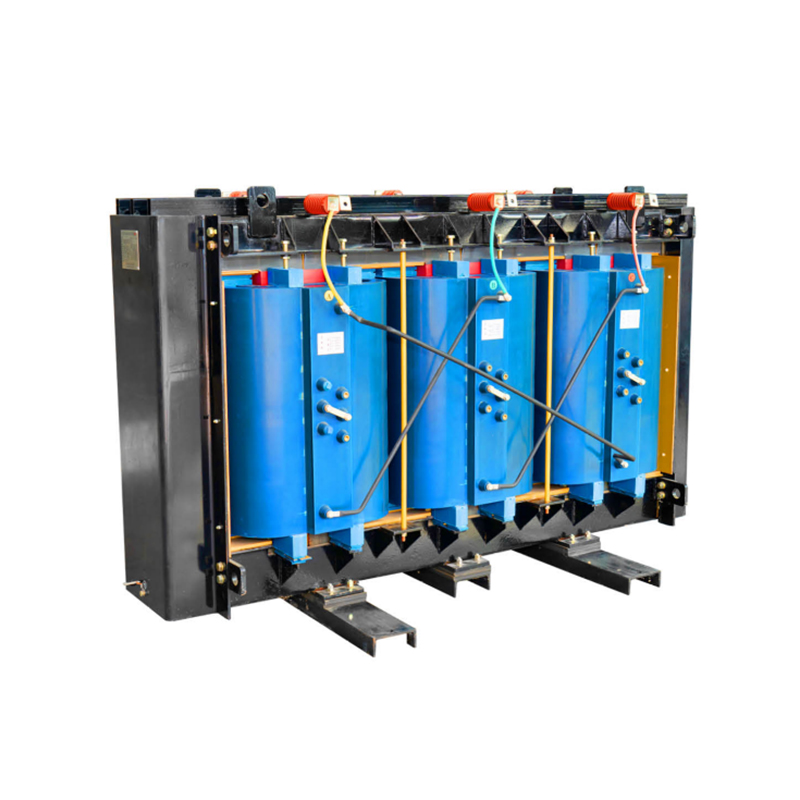 Amorphous Alloy Core Dry Type Transformer SCBH SeriesAmorphous alloy dry-type transformer with resin-cast windings, low no-load loss and oil-free design for continuous load-center duty.View Product →
Insulating medium decides how a fault behaves and how much maintenance a site inherits. Epoxy resin cast dry-type transformers remove oil from the equation completely: no tank, no oil sampling, no bunded compound, no contaminated soil if something goes wrong. The casting also performs well in fire-sensitive locations, which is why they are so often chosen for buildings, tunnels and underground rooms. What they do ask in return is a clean, well-ventilated environment and sensible protection against overvoltage and humidity. Where those conditions are met, they are among the lowest-risk options available.
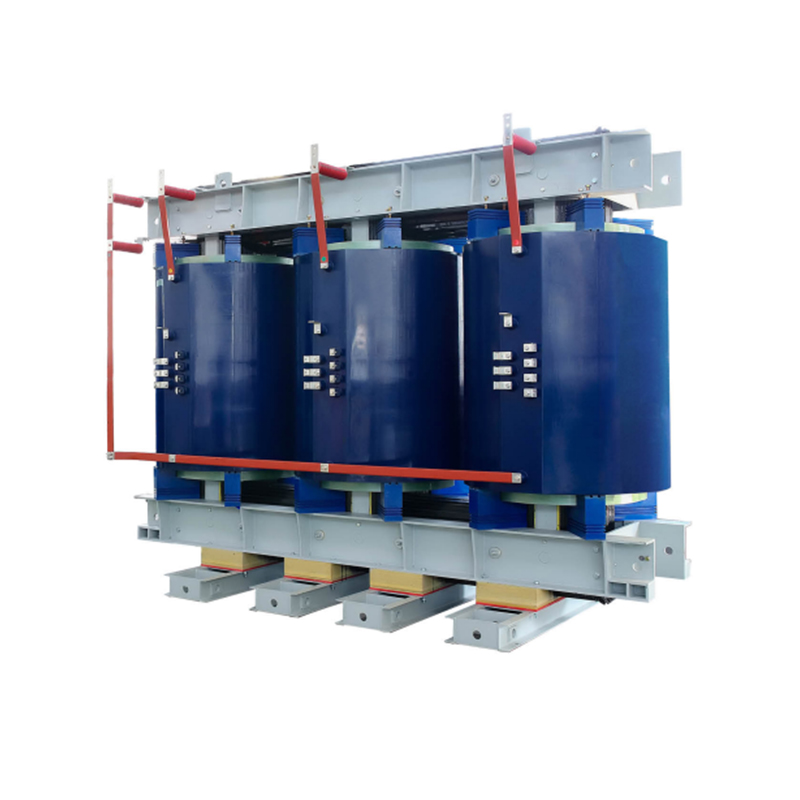 Epoxy Resin Cast Dry Type Transformer SC10 SeriesOil-free cast-resin transformer for high-humidity, fire-sensitive sites, with vacuum-cast windings, maintenance-free operation in industrial and civil load centers.View Product →
One trap catches even experienced buyers: specifying by capacity alone. A unit that is oversized for its duty carries a permanently high no-load loss, and that loss is paid for every hour of the year. It is worth comparing total owning cost rather than first cost, using a load curve that reflects the actual site, and evaluating no-load and load loss separately at the expected operating point.
Environmental performance is decided by the whole installation, not by the transformer alone. Switchgear insulation is the clearest example. SF6 remains an excellent dielectric and arc-quenching medium, but with a global warming potential in the tens of thousands it has become a genuine liability for any organisation reporting emissions. Eco-gas mixtures and solid-insulation designs now cover most medium-voltage duties without it, which simplifies both the carbon balance sheet and the eventual decommissioning paperwork. Reactors deserve attention too: correctly applied series and shunt reactors keep power factor and voltage within limits, reduce reactive current flowing through the network, and therefore trim the losses that transformers and cables would otherwise carry.
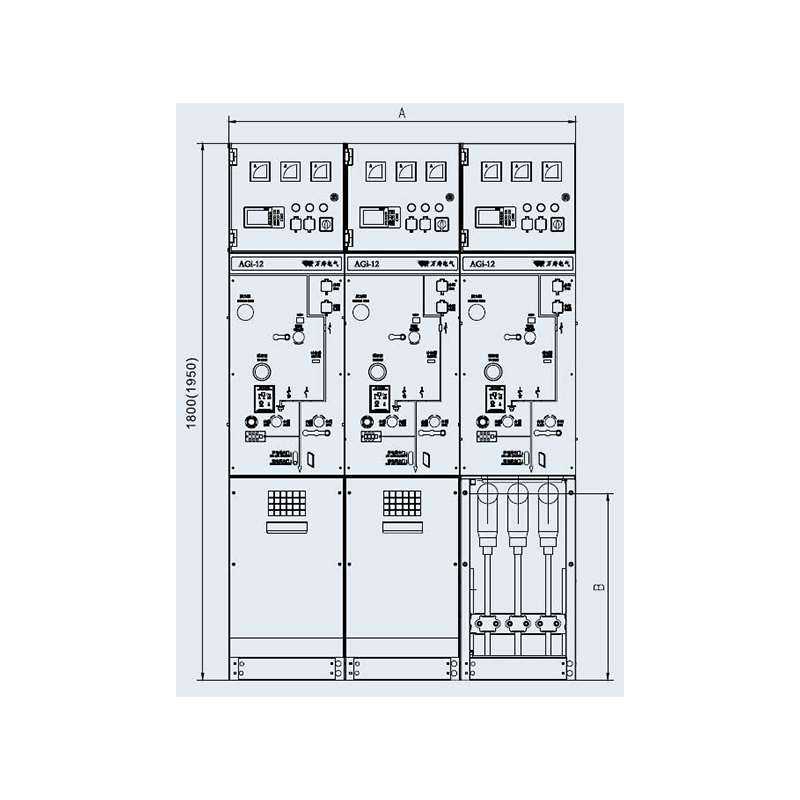 AGi-12 Environmentally Friendly Gas Insulated Ring Main UnitEco-gas insulated 12 kV ring main unit with sealed primary circuit, vacuum arc quenching and maintenance-free gas box for distribution networks.View Product →
When a specification is being finalised, the following questions tend to surface the decisions that matter most.
Working with epoxy cast dry-type designs every day, we have found that environmental performance is decided long before the test bay: in vacuum casting that eliminates voids, in controlled winding tension, in core stacking that avoids short circuits between laminations, and in partial discharge testing that catches problems invisible to the eye. Our own approach to sustainability is built around these production details rather than marketing language, because a transformer that lasts thirty years with minimal maintenance will always outperform a cheaper unit that has to be replaced early.
If you would like to look at how we handle this in practice, our sustainability commitments set out the principles we apply across design, manufacturing and delivery.
Not automatically. Dry-type units avoid oil leakage and fire risk, which is a clear environmental advantage indoors. In remote outdoor locations where a sealed oil-immersed unit can run at a lower loss and cost, however, the overall footprint may be smaller. The deciding factors are the location, the load profile and how the unit will be maintained.
Distribution losses on the way to end users are a measurable share of electricity generated, and transformers sit at the centre of that figure. Because no-load loss is continuous, even a small percentage improvement across a large fleet converts into significant annual energy savings and avoided emissions.
Routine, type and no-load loss test reports are the starting point, together with certificates for the efficiency class claimed. For oil-filled equipment, ask about the insulating liquid and its handling at end of life; for switchgear, ask whether SF6 is used and what recovery arrangements exist.
Environmental protection in electrical transformers is not a single feature that can be ticked off on a datasheet. It is the sum of a core material, an insulation system, a loss figure evaluated against a real load curve, and a disposal plan that someone has actually thought through. Get those four things right and the environmental argument will look after itself, quietly, year after year.
1.Types of High Voltage Switchgear The main categories of high voltage switchgear include Air-Insula...
View More1. Working Principle Oil-immersed transformers play a pivotal role in modern electrical power system...
View More1. Advantages of Distribution Dry Type Transformers Distribution dry type transformers have become i...
View More
 中文简体
中文简体 русский
 Español
 عربى
عربى