
Get a Quote


Most conversations we have with North American buyers begin the same way: a specification clause arrives, it says "UL Listed", and someone on the project team asks whether that is a legal obligation or simply a preference. It is a fair question, and the honest answer is more layered than a plain yes or no.
We have spent years building transformers and switchgear for IEC markets, and we have sat through plenty of listing discussions with customers, specifiers and testing bodies. What follows is the version of the answer we would give a colleague who called on a Friday afternoon with a shipment to plan.
No federal law in the United States requires electrical equipment to carry a UL mark. UL is a private organization founded in 1894 that publishes safety standards and tests products against them. It is not a government agency, and its mark is not a national stamp of legal approval. That is why almost every guide on the subject repeats the same sentence: certification is voluntary.
Voluntary, though, describes the paperwork, not the market. Once equipment reaches a job site, several independent gates can each demand a mark from a recognized testing laboratory, and any one of them is enough to hold up a delivery. For transformers and switchgear the practical question is rarely "is UL required?" but "who on this project will ask for it, and what will they accept?"
One related point deserves separating out: some US obligations genuinely are legal. Energy efficiency for distribution transformers is regulated under 10 CFR 431, and electromagnetic compatibility falls under FCC rules. Those are compliance duties in the strict sense. NRTL listing is a market-access duty.
In workplaces covered by OSHA, electrical conductors and equipment are acceptable only if approved. OSHA does not name a single certification body; it recognizes Nationally Recognized Testing Laboratories, and every field mark you will see — UL, ETL, CSA, TÜV, MET — comes from a laboratory in that program. This is why a well-written specification says "listed by an NRTL" instead of "UL", and why an ETL label is not worth less than a UL one. They answer the same question.
The NEC requires equipment to be approved and then hands the judgement to the authority having jurisdiction, usually a municipal electrical inspector or a state electrical bureau. Inspectors do not test products. They look for a label or for a field evaluation report from an NRTL, and they check the transformer provisions in Article 450. Equipment that arrives with neither fails inspection, and the energization date moves.
Three more gates sit outside the code book. Utilities normally require listed equipment at the point of interconnection. Property insurers write conditions into policies. And the project specification, frequently copied from an earlier job, can be stricter than any of them. In our experience that specification is what actually settles the matter.
The word "UL" gets used loosely, but the marks are not interchangeable. Before promising anything, clarify which of these is intended.
| Mark | What it means | Typical use in power equipment |
|---|---|---|
| UL Listed | Complete product evaluated and periodically inspected against a published standard | Dry-type transformers, panelboards, complete assemblies |
| UL Classified | Evaluated for specific characteristics or a defined scope, not the whole product | Insulation systems, limited-scope evaluations |
| UL Recognized Component | Component intended to be built into another listed product | Bushings, terminals, internal wiring, relays |
| Field evaluation label | One-time assessment at the installation site by an NRTL | Imported switchgear or transformers already delivered |
If a tender says only "UL certified", ask which of the four is meant and which standard applies. The gap between Listed and Recognized alone can change a project's cost and schedule by months.
Once the mark is clear, the next question is the standard behind it. Here is how the picture usually looks for the equipment we build.
In North America, dry-type general purpose and power transformers are typically evaluated against UL 1561, with UL 1562 covering dry-type distribution units above 600 volts. Because epoxy cast units are sealed and do not contribute fuel to a fire, the evaluation centres on temperature rise, dielectric strength and the insulation system. Our epoxy resin cast range in the 800 to 25000 kVA window is the family North American customers ask about most often, since it sits in the medium-voltage band where inspection scrutiny is highest.
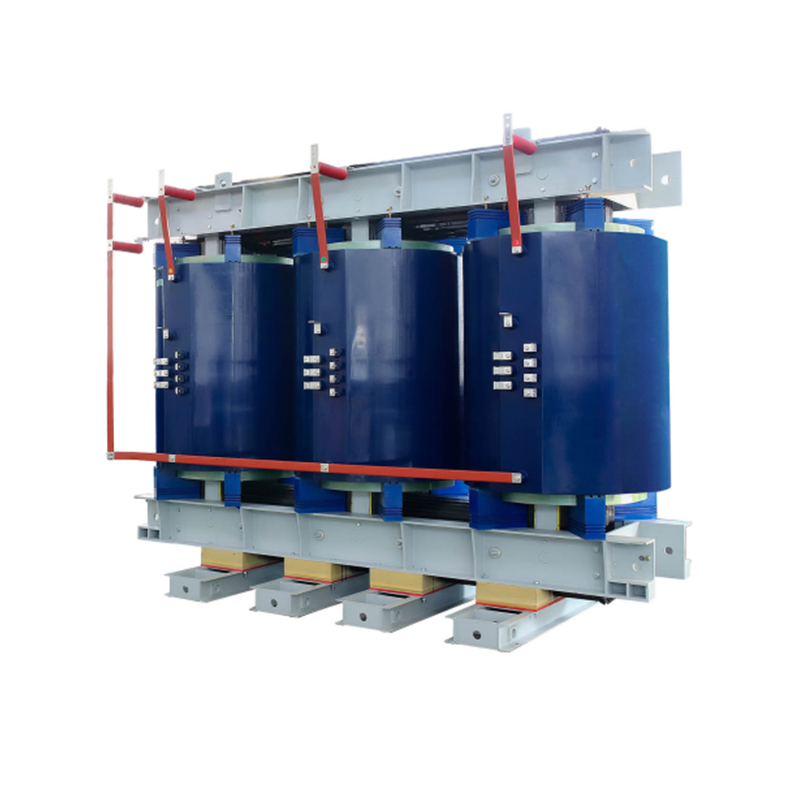 SC10 Epoxy Resin Cast Dry-Type Transformer SeriesSealed epoxy cast windings suit medium-voltage industrial and civil installations where fire safety, humidity resistance, and low maintenance matter.View Product →
For oil-immersed units, North American practice leans on the IEEE C57 family for design and testing, on DOE rules for efficiency, and on the utility's own interconnection standard. Where a listing is demanded, the scope is agreed with the certification body case by case rather than read off one universal document. A 35 kV unit feeding a customer-owned substation is a good illustration: the utility's requirements usually shape the acceptance criteria long before the code book does.
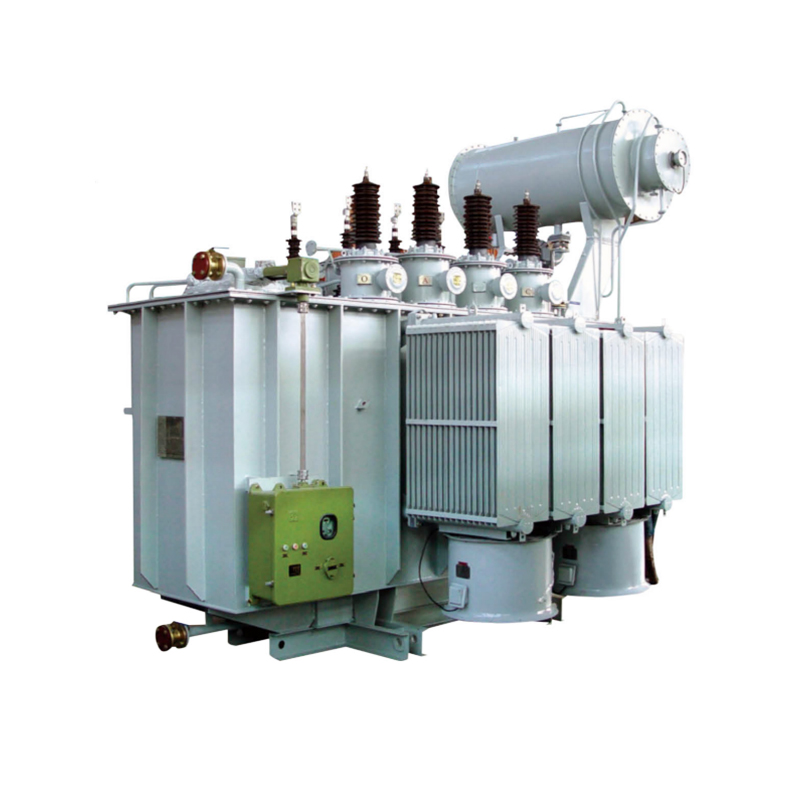 S11 Series 35 kV Oil-Immersed Power TransformerOil-immersed 35 kV design for industrial and urban grids, with copper-foil windings and sealed tank construction limiting moisture ingress.View Product →
Medium-voltage switchgear is where the "just get it listed" advice breaks down most often. Metal-clad and metal-enclosed assemblies are designed to IEEE C37.20.2 and C37.20.3, and a full NRTL listing is not offered for every configuration, particularly at 35 kV and above. In those cases the realistic path is witnessed type testing plus a field evaluation at site. Ring main units and compact secondary substations are more frequently available as listed products, which is why they keep appearing in pad-mount and industrial projects.
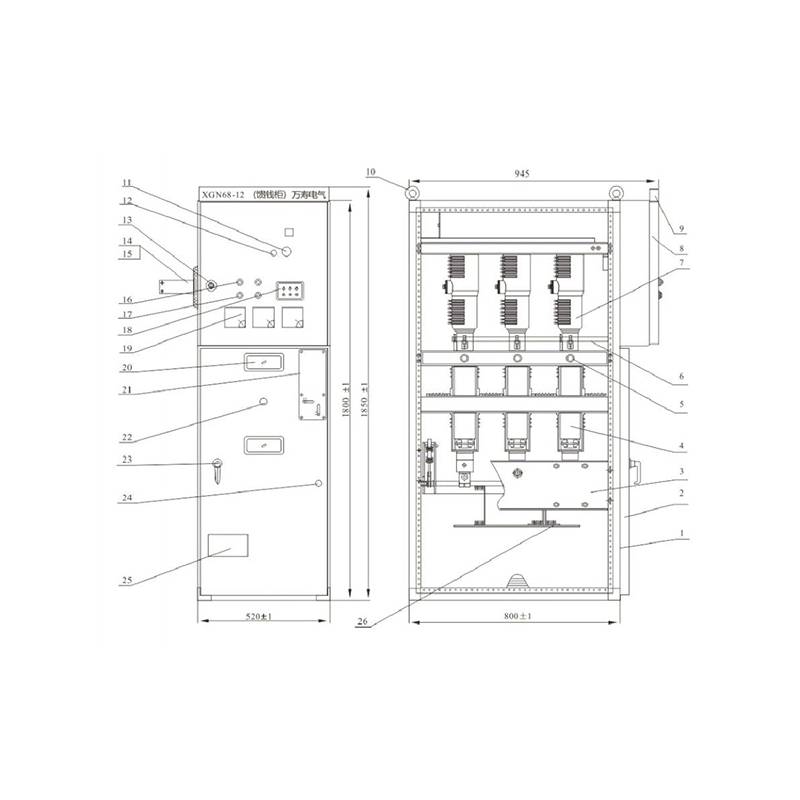 XGN68-12 AC Metal-Enclosed Ring Network SwitchgearCompact 12 kV ring main unit with load switches or vacuum circuit breakers, designed for safer fuse replacement and flexible distribution configurations.View Product →
For a manufacturer, listing is not a form to fill in. It is a programme, and it follows roughly this path:
Budgets vary widely with voltage class and complexity, but a listing programme for a transformer family is a capital project measured in months rather than weeks, with testing and follow-up costs that continue annually. That is precisely why buyers often choose a field evaluation for a single installation.
Field evaluation exists for the case where equipment is already built, or was built for a market that does not need the mark. An NRTL engineer examines the unit on site against the applicable standard, reviews or witnesses tests, and applies a label valid for that installation only. It is quicker and cheaper than a product listing, and inspectors generally accept it. What it cannot do is turn a product line into a listed product, because the next identical unit needs its own evaluation. For a one-off retrofit or a shipment already in transit, however, it is often the only realistic answer.
We build to IEC and GB standards every day, and we prefer to be straightforward about where that leaves a North American project. When a US or Canadian specification arrives, we start by clarifying which mark and which standard the buyer actually needs, then confirm what can be supported now: a full listing, a witnessed test programme, or documentation for a field evaluation. Our test records are prepared with that conversation in mind, because a certification body will ask for exactly those documents. You can see how in-house inspection and testing are organised on our quality page.
We would rather tell a customer at the quotation stage that a listing will take four months than discover it after the container has sailed. That is not caution for its own sake; it is the only way the delivery date on the purchase order means anything.
None of this is glamorous, but it is the difference between an inspection that passes first time and a container sitting in a laydown yard. If you are still at the early stage, the questions we answer most often are collected in our FAQ. If you would rather just talk it through, send us the specification and we will tell you plainly what applies to your project.
1.Types of High Voltage Switchgear The main categories of high voltage switchgear include Air-Insula...
View More1. Working Principle Oil-immersed transformers play a pivotal role in modern electrical power system...
View More1. Advantages of Distribution Dry Type Transformers Distribution dry type transformers have become i...
View More
 中文简体
 русский
 Español
 عربى
