Get a Quote


Europe’s grid operators and industrial developers face a common tension: they need reliable medium‑voltage distribution infrastructure fast, but traditional brick‑and‑mortar substations demand months of civil work and complex on‑site coordination. Prefabricated substations eliminate that bottleneck. A fully assembled, factory‑tested unit can be trucked to site and energized in days rather than weeks.
This speed is not the only advantage. Prefabricated units condense transformers, medium‑voltage switchgear, low‑voltage panels, protection relays, and auxiliary systems into a single weather‑proof enclosure. The result is a smaller physical footprint—often 40–60 % less land than a conventional substation building—and a reduction in total installed cost of 15–25 % according to project data from European distribution system operators.
For applications such as city infill reinforcement, wind or solar collector stations, temporary construction supply, or industrial campus upgrades, the modular concept simplifies permitting and future expansion. When you compare a prefabricated substation to a site‑built equivalent, the decision becomes one of risk reduction: all critical assembly, wiring, and testing happen inside a controlled factory, not in a muddy trench.
| Factor | Prefabricated Substation | Traditional Site‑Built |
|---|---|---|
| Typical on‑site installation time | 2–5 days | 6–12 weeks |
| Total project duration (design to energization) | 10–16 weeks | 20–35 weeks |
| Footprint (average 20 kV, 1000 kVA) | 8–15 m² | 25–40 m² |
| Factory testing coverage | Full FAT (insulation, partial discharge, interlocking) | Limited component testing on site |
One European design that consistently meets tight urban requirements is the European boxtype prefabricated substation, engineered for compact footprint and full integration with ring‑main‑unit switchgear.
Supplier selection starts with a hard requirement: the substation must carry the right certifications for the country where it will operate. Across the EU and EFTA states, the baseline norm is IEC 62271‑202, “High‑voltage switchgear and controlgear — Part 202: High‑voltage/low‑voltage prefabricated substation”. This standard defines classification for internal arc protection (IAC), loss of service continuity categories, and mechanical endurance of the enclosure.
Alongside it, EN 50532 (which superseded HD 637 S1) provides supplementary requirements for prefabricated substations up to 36 kV, including specific tests for the concrete or metal enclosure under harsh thermal and mechanical conditions. A supplier’s declaration of conformity alone is not enough; procurers should demand type‑test certificates issued by an accredited third‑party laboratory such as KEMA, PEHLA, or CESI.
| Standard | Scope | Key requirement examples |
|---|---|---|
| IEC 62271‑202 | Prefabricated substations 1 kV–52 kV | IAC classification (A FLR, AFLR, etc.), enclosure mechanical withstand, temperature‑rise limits |
| EN 50532 | European‑specific supplement to IEC 62271‑202 | Enclosure strength under wind, snow, and seismic loads; fire resistance of materials; sound level limits |
| IEC 61850 (communication) | Substation automation and communication | Interoperability of protection and control devices over Ethernet; mandatory for many grid connection agreements |
| EU Ecodesign (Tier II) | Transformer energy performance | Minimum peak efficiency index for distribution transformers; applies to oil‑immersed and dry‑type units |
In addition, many national TSOs impose their own addenda. Germany often requires VDE‑AR‑N 4110 for medium‑voltage grid connection; the UK references G99 and ENA TS 41‑24. A well‑prepared supplier will be able to provide a compliance matrix mapping their design to each clause, rather than generic “CE‑marked” statements.
The European supply landscape splits broadly into three groups: global engineering groups with localized production, large Asian manufacturers serving Europe through agents or regional stock, and specialist regional fabricators. Buyers who need after‑sales service density and proven DNO acceptance often lean toward the first group; those optimizing for capital cost frequently explore the second. The table below compares representative players, not an exhaustive list, but a snapshot of capabilities that matter in procurement decisions.
| Supplier | Typical voltage range | Core advantage | European certifications held |
|---|---|---|---|
| Hitachi Energy | Up to 40.5 kV | Global factory‑tested modular units, wide service network in 100+ countries | IEC 62271‑202, EN 50532, customer‑specific type tests |
| Siemens Energy | Up to 36 kV | Standardized “E‑House” for temporary/permanent use, strong grid‑code integration | IEC, EN, VDE, G99 adaptable |
| Bokong Electric | 10–35 kV | Cost‑competitive European‑style compact design; rapid customization for PV and industrial loads | IEC 62271‑202, type‑test packages for EU markets |
| CHINT Global | 10–24 kV | High‑volume manufacturing, extensive low‑voltage component ecosystem | IEC, some EN certifications per project |
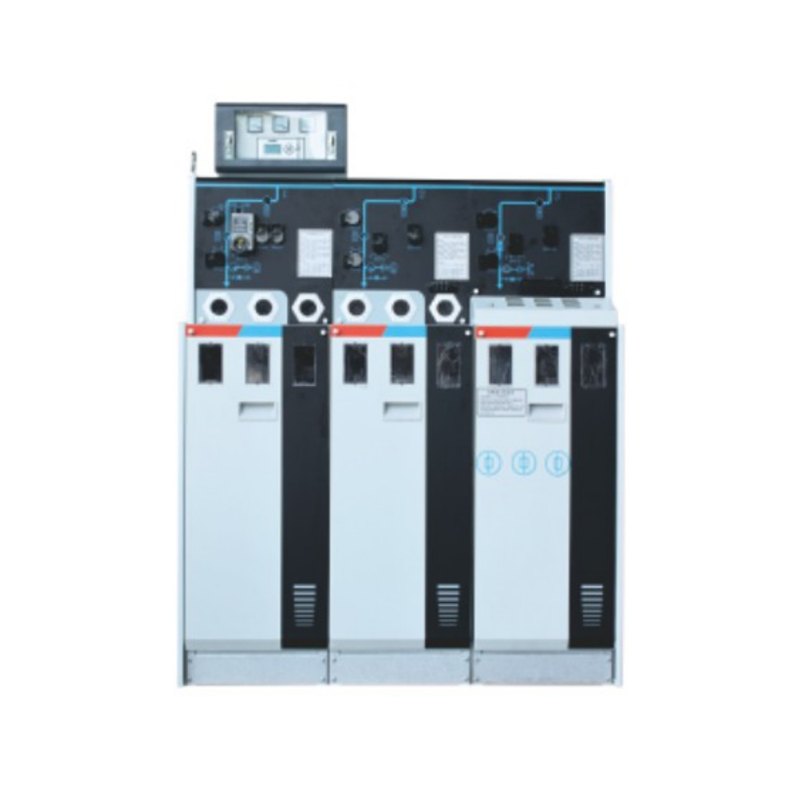
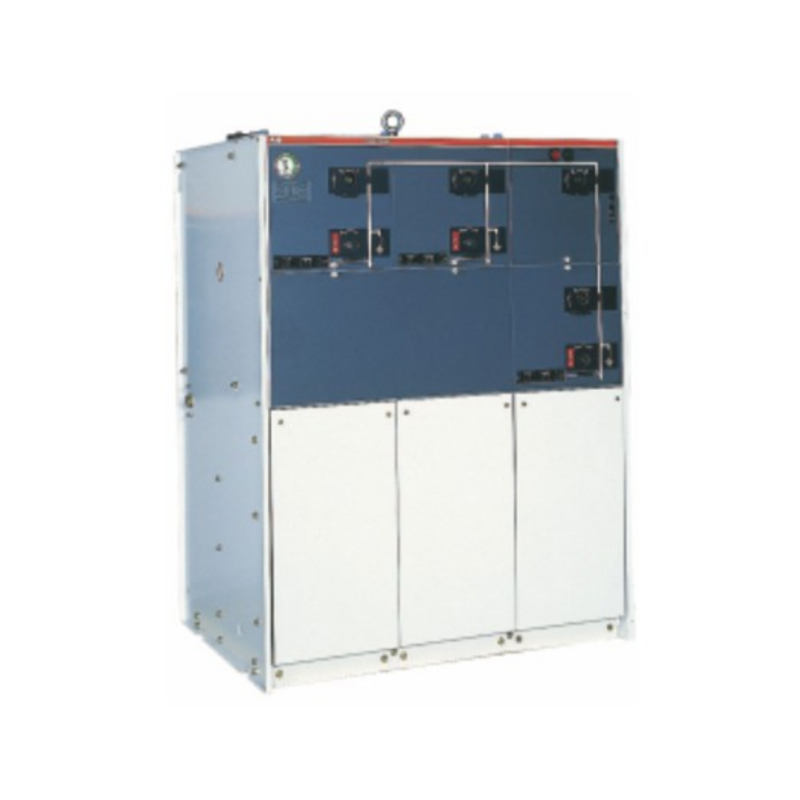
When a project demands a fully integrated solution with coordinated transformer, ring‑main‑unit, and LV board from a single source, AC metal‑enclosed ring‑network switchgear paired with a dry‑type transformer inside the substation simplifies both logistics and warranty responsibility. Such bundled packages reduce interface risks that often appear when different suppliers deliver individual components.
The initial purchase price of a Chinese‑manufactured prefabricated substation, ex‑works, is typically 25–35 % lower than a comparable unit from a Western European factory. But that figure alone is a poor guide to total project cost. Freight, port handling, import duties, certification engineering, and the cost of on‑site commissioning can erode much of the gap. For a typical 20 kV, 800 kVA unit, the delivered cost breakdown often looks like this:
What often tilts the decision is lead time and post‑delivery support. European manufacturers can often deliver within 10–14 weeks and deploy local service engineers the same week. Long supply chains from Asia can stretch to 18–22 weeks door‑to‑door, and resolving a warranty claim may take weeks if a return shipment is needed. For time‑critical renewable energy projects with liquidated damages, that schedule risk can outweigh the upfront savings.
On the other hand, when large quantities (10+ identical units) are required and the buyer can manage certification and commissioning independently, sourcing from a Chinese supplier with proven European project references becomes a legitimate strategy. The key is to negotiate an Incoterms framework that puts the supplier’s accountability at your site, ideally DAP or DDP, and to hold adequate retention until commissioning is signed off.
Inside the substation, the choice of transformer technology also drives cost. A epoxy resin cast dry‑type transformer avoids oil‑related fire risks and simplifies civil works, often reducing overall installation cost even when the unit price is higher, especially in buildings or sensitive environmental zones.
A valid type‑test certificate stamped by a recognized lab is the entry ticket, but it tells you nothing about consistency. The next step is to examine the supplier’s production and testing regime. Start with a factory audit checklist.
During the factory visit, pay special attention to the wire‑way and busbar compartment. The tightness of the assembly and the quality of the anti‑condensation heating system predict long‑term reliability far better than a glossy brochure.
A mid‑sized Stadtwerke in North Rhine‑Westphalia needed to reinforce its 20 kV network in a dense residential district where building a conventional substation was impossible within the municipality’s land‑use schedule. The solution was a factory‑assembled European‑type compact substation, integrating a 630 kVA cast‑resin transformer, a three‑panel RMU with SF6‑free vacuum switching technology, and a remote terminal unit for SCADA connection via IEC 61850.
The entire unit was manufactured and fully tested at the supplier’s facility in China under the supervision of a German third‑party inspector. The inspection covered IAC classification AFLR 31.5 kA / 1 s, enclosure IP43 integrity, and a 24‑hour temperature‑rise test per IEC 62271‑202. After sea and road transport, the substation was set on a prepared concrete plinth and connected to the MV cable network. Local commissioning, including protection parameterization and a point‑to‑point SAT, was completed in three working days.
The Stadtwerke achieved system reinforcement six weeks ahead of the original timeline and reduced the total project cost by 22 % compared with the initial brick‑building design. The site has now logged over 30 months of uninterrupted operation, with only one scheduled maintenance shutdown for RMU visual inspection.
This example shows that cross‑border supply works when the certification package, FAT, and post‑delivery support are engineered from day one. For brownfield city sites where every square meter counts, a solid‑insulation intelligent ring main unit further shrinks the switchgear compartment and eliminates the handling restrictions associated with SF6-insulated equipment.
1.Types of High Voltage Switchgear The main categories of high voltage switchgear include Air-Insula...
View More1. Working Principle Oil-immersed transformers play a pivotal role in modern electrical power system...
View More1. Advantages of Distribution Dry Type Transformers Distribution dry type transformers have become i...
View More
 中文简体
中文简体 русский
 Español
 عربى
عربى