
Get a Quote


Ask five electrical engineers why a plant paid a low-power-factor penalty, and you will get five slightly different explanations. The common cause is usually the same: too much reactive current flowing through transformers, cables, and switchgear. Reactive power compensation does not reduce the kWh you use. It reduces the wasted current, stabilizes voltage, and prevents the distribution system from carrying kVA that only heats up components.
An induction motor and a transformer both need a magnetic field to transfer energy. That magnetic field is sustained by reactive current. Active power (kW) produces shaft work and heat, while reactive power (kVAr) supports the field. The vector sum is apparent power (kVA), and power factor is the ratio of kW to kVA. When the ratio is low, more current is required for the same active load, which increases losses in conductors and forces transformers and switchgear to be larger than the active load alone would require.
Compensation is the deliberate addition of devices that produce or absorb reactive power at a preferred location. Capacitor banks produce capacitive kVAr and are used when a plant has an inductive lagging power factor. Shunt reactors absorb kVAr and are used when cables or lightly loaded lines produce too much capacitive charging current. Both approaches are reactive power compensation.
Choosing one technology over another depends on the size of the load, the speed of load changes, harmonic distortion, and utility requirements. The table below summarizes the main options.
| Technology | Function | Typical Application | Response Speed |
|---|---|---|---|
| Fixed capacitor bank | Produces constant capacitive kVAr | Steady loads, industrial distribution | Step change at energization |
| Automatic capacitor bank | Switches capacitor steps to hold a target power factor | Plants with variable load profiles | Seconds to tens of seconds |
| Detuned reactor plus capacitor | Blocks harmonic currents and limits inrush current | Facilities with VFDs, UPS, and rectifier drives | Step change after detuning |
| Shunt reactor | Absorbs surplus reactive power | Long cable circuits, lightly loaded networks | Continuous or switched |
| STATCOM or synchronous condenser | Rapidly adjusts reactive output | Arc furnaces, voltage flicker, dynamic grid support | Milliseconds |
Capacitor banks are the most common solution for industrial power factor correction, but they are rarely installed without reactors. A series reactor limits the inrush current when the bank closes and detunes the capacitor from the system’s resonant frequency. In an environment with 5th or 7th harmonic currents, an undamped capacitor bank becomes a convenient path for harmonic current to flow, which leads to fuse blowing, capacitor swelling, and transformer overheating. A shunt reactor, by contrast, consumes reactive power and is useful on networks where voltage rises because of capacitive current from cables.
Because the reactor must carry continuous harmonic currents and hold its inductance under varying conditions, the construction choice matters. Zhejiang Detong Transformer Co. manufactures both a dry-type iron-core series reactor and a dry-type iron-core shunt reactor for 10 kV and 35 kV distribution systems. The dry-type iron-core design offers stable inductance, lower acoustic noise than typical air-core units, and simpler maintenance in industrial environments. Engineers who have solved capacitor bank failures often find that upgrading the reactor is more reliable than replacing capacitors again.
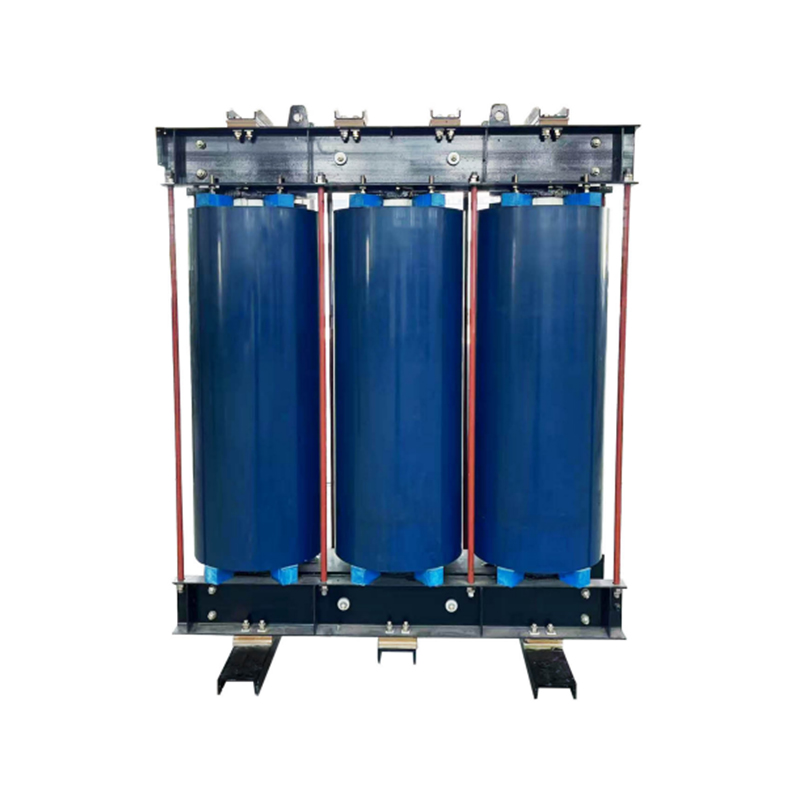 Custom Dry-Type Iron Core Shunt Reactor Suppliers, Company - Zhejiang Detong TraDetong Transformer China wholesale Dry-Type Iron Core Shunt Reactor suppliers and Dry-Type Iron Core Shunt Reactor company, details: We a...View Product →
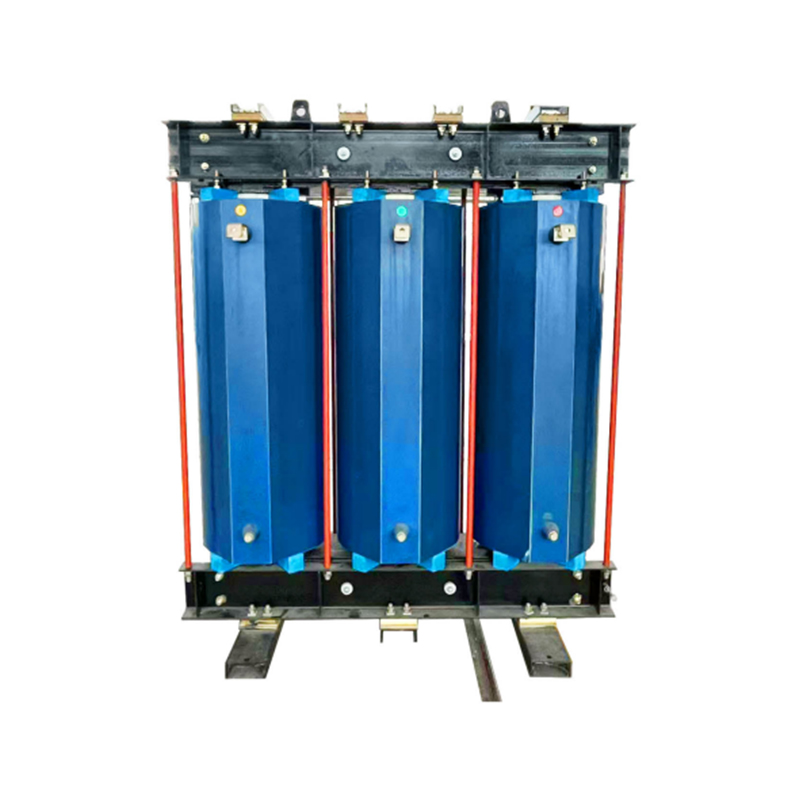 Custom Dry-Type Iron Core Series Reactor Suppliers, Company - Zhejiang Detong TrDetong Transformer China wholesale Dry-Type Iron Core Series Reactor suppliers and Dry-Type Iron Core Series Reactor company, details: Ou...View Product →
Before issuing a purchase specification, collect these details for your application.
Under ideal conditions, a capacitor bank is simple. In a real plant, the same bank can fail in weeks if the network is distorted. These mistakes are common.
For a more systematic view of how these issues interact with other power-quality problems, the article on power quality issues in industrial plants offers a useful breakdown.
Reactive power compensation is not an isolated accessory. The reactor, capacitor, and control cubicle are connected to a transformer and switchgear that have their own short-circuit, thermal, and insulation constraints. When the equipment comes from one manufacturer, the ratings are easier to align. Zhejiang Detong Transformer Co. is a high-tech enterprise with a stated annual capacity of 3.15 million kVA and a product range that covers oil-immersed power transformers, dry-type cast-resin transformers, dry-type iron-core reactors, and high-voltage switchgear. That is the kind of catalogue that lets a design engineer compare transformer impedance with reactor inductance and switchgear breaking capacity without chasing multiple suppliers.
Many capacitor bank failures are traced back to a reactor that was too small, an incorrect tuning frequency, or a transformer impedance that created a resonance point. A manufacturer that builds all three components is more likely to treat the compensation reactor as part of a coordinated distribution system. You can also find an explanation of why dry-type reactors are used in limiting compensation and distribution applications in Detong’s technical article library.
Start with one week of logged active power, reactive power, power factor, and harmonic measurements. Calculate the required compensation step size from the worst case, not from the annual average. Choose a capacitor bank and detuning reactor that can survive both the steady state and the transient events. Then verify the completed installation with a power-quality analyzer.
If the compensation project is part of a larger transformer or switchgear replacement, review the full product catalogue on Detong’s website so that equipment ratings stay consistent. The goal is not to buy the cheapest capacitor shelf; it is to keep reactive current out of the parts of the network that are not meant to carry it.
1.Types of High Voltage Switchgear The main categories of high voltage switchgear include Air-Insula...
View More1. Working Principle Oil-immersed transformers play a pivotal role in modern electrical power system...
View More1. Advantages of Distribution Dry Type Transformers Distribution dry type transformers have become i...
View More
 中文简体
中文简体 русский
 Español
 عربى
عربى