Get a Quote


A substation engineer asks for a "VCB retrofit," a bank compliance officer investigates a "VCB fee," and a gamer jokes about a "VCB glitch." The three acronyms share nothing except that each stands for a distinct term. In electrical engineering, VCB almost always means Vacuum Circuit Breaker — the most common and technically significant meaning. But depending on the industry, the same three letters carry very different definitions. The table below captures the most frequent ones you will encounter.
| Abbreviation | Full Name | Domain | Description |
|---|---|---|---|
| VCB | Vacuum Circuit Breaker | Electrical Engineering | A circuit breaker that uses a vacuum to extinguish the arc when interrupting current; standard protection in medium-voltage switchgear. |
| VCB | Vendor Charge-Back | Finance / Retail | A fee charged by a vendor to recover costs associated with non-standard deductions or processing errors. |
| VCB | Vehicle Control Board | Automotive / Gaming | An electronic control unit in vehicles; also a frequently used term in GTA role-playing communities for a car-related interface. |
| VCB | Value Control Box | Military / Electronics | A device for regulating voltage or signal values in weapon systems or specialized electronics. |
| VCB | Vacation Camp for the Blind | Non-profit | A recreational camp located in Spring Valley, NY, providing outdoor experiences for visually impaired individuals. |
For anyone working with power distribution, transmission, or industrial electrical infrastructure, only the first entry matters. The vacuum circuit breaker sits at the core of modern medium-voltage protection, handling voltages from 3.6 kV up to 40.5 kV and breaking fault currents that can exceed 60 kA. This article focuses entirely on that electrical meaning: how a VCB works, why it dominates switchgear design, and what you need to know when specifying or maintaining one.
A VCB interrupts current by separating contacts inside a sealed vacuum interrupter, often called the vacuum bottle. Unlike air or oil circuit breakers that rely on external arc-chutes or oil to quench the arc, the VCB uses the vacuum itself — an environment where the pressure is so low that only a tiny number of gas molecules remain. This absence of ionizable material makes vacuum an exceptionally strong dielectric medium.
When a fault occurs, the protective relay sends a trip signal to the VCB. The operating mechanism releases stored energy — typically from a charged spring — and pulls the moving contact away from the fixed contact. As the contacts part, the current continues to flow through the metal vapor that forms between them, sustaining an arc. Because the arc burns in a vacuum, the metal vapor and plasma rapidly expand and condense on the contact surfaces and the surrounding shields. At the first natural current zero, the arc cannot re-ignite; the dielectric strength of the vacuum gap recovers almost instantly, and the circuit is safely interrupted.
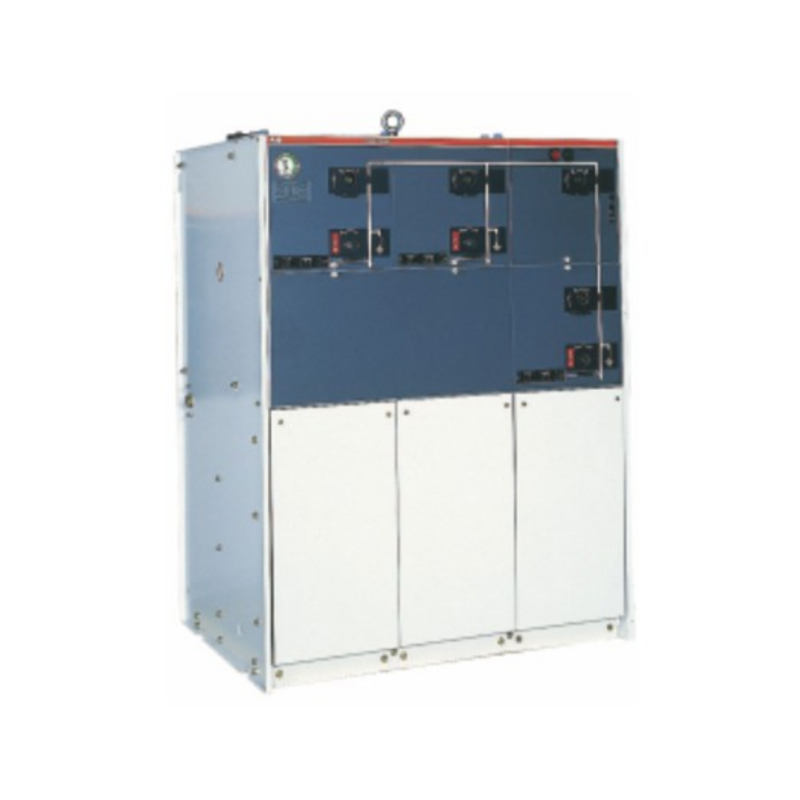
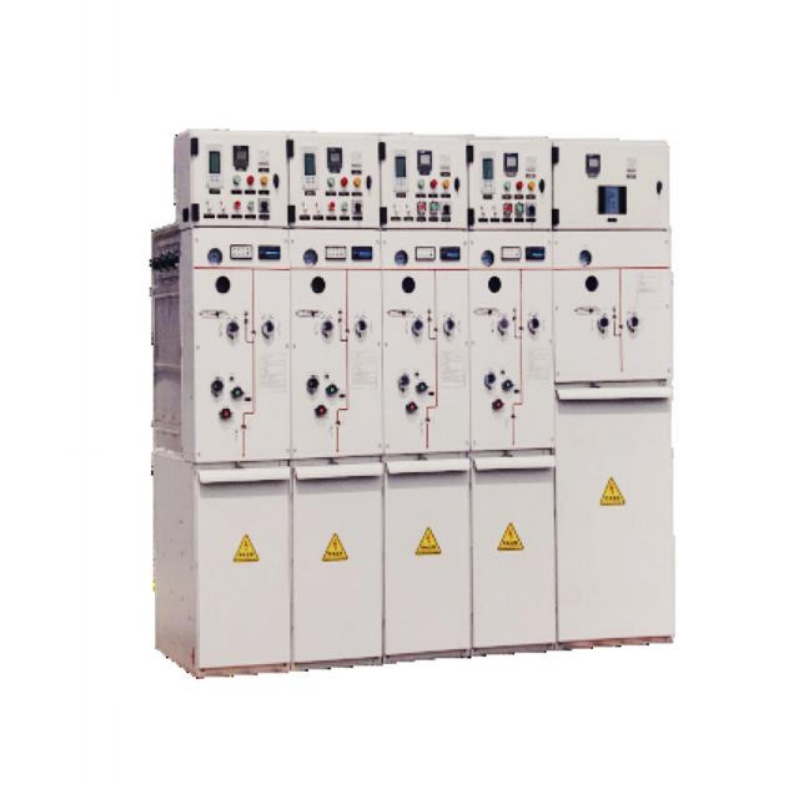
This process completes in less than a quarter of a cycle. A typical 12 kV VCB reliably interrupts full fault current in 8 to 20 milliseconds after trip initiation. The vacuum interrupter can clear short-circuit currents of 31.5 kA or 40 kA in lower voltage classes, and units rated for 63 kA are available for demanding industrial applications. In field installations, VCBs are usually integrated into high-voltage switchgear assemblies that provide mechanical support, busbar connections, and secondary control wiring. The vacuum bottle itself remains sealed for life, requiring no gas refilling or oil handling.
Vacuum circuit breakers have become the default choice for indoor medium-voltage switchgear up to 40.5 kV. Their technical superiority rests on several measurable advantages over older technologies. Each advantage directly reduces long-term ownership cost and improves safety.
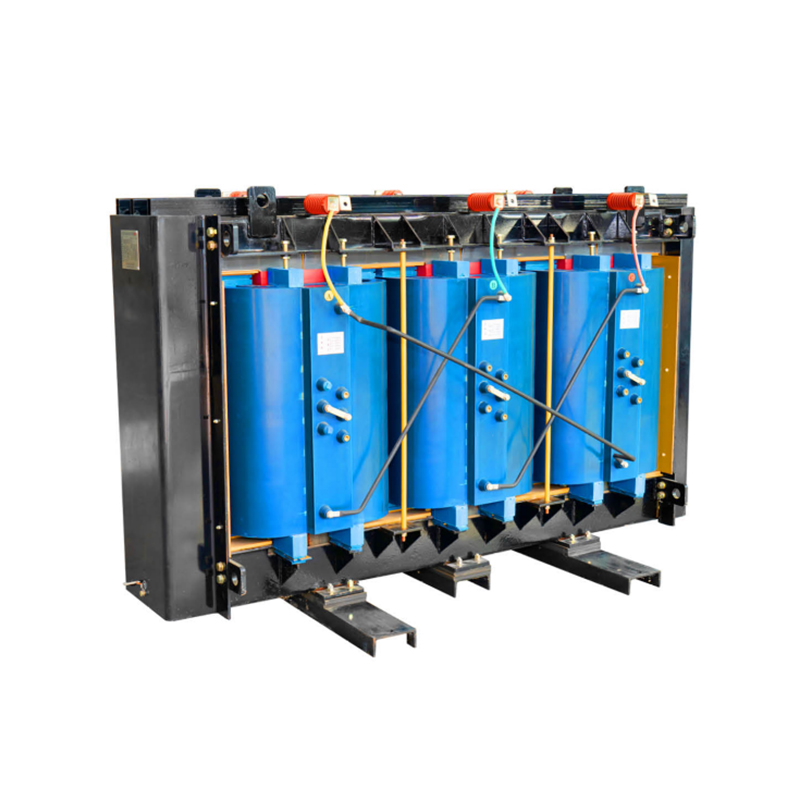
The combination of long life and clean operation makes VCB a natural partner for dry-type transformers in urban substations, hospitals, and data centers where flammable liquids or gas leakage cannot be tolerated.
Selecting a circuit breaker technology means balancing interruption performance, maintenance burden, cost, and environmental footprint. The table below compares vacuum, SF6, and oil types across seven dimensions that matter in real-world projects.
| Feature | Vacuum Circuit Breaker (VCB) | SF6 Circuit Breaker | Oil Circuit Breaker |
|---|---|---|---|
| Arc quenching medium | Vacuum | Sulfur hexafluoride gas | Mineral oil |
| Maintenance frequency | Low; sealed-for-life interrupter | Medium; periodic gas checks and pump operations | High; oil sampling, filtering, and replacement |
| Environmental impact | None; no greenhouse gas | SF6 has 23,500 times GWP of CO2 | Risk of soil and water contamination |
| Typical voltage range | 3.6 kV to 40.5 kV (up to 84 kV in special designs) | From 3.6 kV up to 800 kV | Historically up to 36 kV, rarely used above |
| Rated breaking capacity | Up to 63 kA | Up to 80 kA | Up to 40 kA |
| Expected electrical life | 30,000 operations | 10,000 to 15,000 operations | 5,000 operations |
| Relative initial cost | Moderate | Higher | Lower (but obsolete) |
For indoor medium-voltage installations up to 40.5 kV, VCB is the clear front-runner. It eliminates the regulatory headache of SF6 reporting and provides a longer maintenance cycle than any oil-filled alternative. SF6 breakers still hold an advantage at transmission voltages above 72.5 kV and in extremely high breaking capacities above 63 kA, but in distribution and industrial settings, vacuum technology is the standard. Oil circuit breakers are rapidly being phased out due to fire risk and maintenance overhead.
Every VCB carries a nameplate with values defined by international standards, primarily IEC 62271-100 for high-voltage AC circuit breakers and IEEE C37.04 for ratings. Choosing the right VCB starts with reading these parameters correctly.
IEC 62271-100 also mandates type tests for dielectric withstand, temperature rise, and short-time withstand current. When comparing VCB data sheets, confirm that the listed values correspond to the same standard edition and test conditions. Differences in altitude derating or ambient temperature curves can significantly affect the usable rating.
While VCBs are remarkably reliable, three failure modes appear most often in field service. Early detection avoids unplanned outages and extends the life of the switchgear.
The interrupter’s internal pressure must remain below 10^-4 Pa. If the ceramic-to-metal seals degrade, air leaks in and the vacuum is lost. The most reliable field test is a power-frequency withstand test across the open contacts. A breaker that should hold 42 kV for one minute but breaks down at a significantly lower voltage likely has a failed vacuum interrupter. Partial discharge measurements can also provide early warning. A single failed bottle requires immediate replacement; continued operation risks failure to interrupt and catastrophic overheating.
Spring-charged mechanisms are the most common VCB operators. Over time, grease thickens, springs sag, and latch surfaces wear. Symptoms include slow opening or closing times, incomplete stroke, and repeated charging motor runs. Check the stored-energy status indicator, measure opening and closing times with a circuit breaker analyzer, and follow the manufacturer’s lubrication schedule. In extreme cases, a motor that runs continuously without charging the spring indicates a broken gear or a failed limit switch.
Every interruption consumes a tiny amount of contact material. VCBs have a contact wear allowance, typically 3 mm to 4 mm. When the erosion reaches the limit, the contacts must be replaced. Most breakers provide a visible wear indicator or a trip flag. Measure the contact stroke and wipe (contact over-travel) during routine maintenance. If the wipe drops below the minimum specified value — often 1.5 to 2 mm — the contacts are near the end of life and the complete vacuum interrupter should be exchanged.
Selecting a VCB is a structured decision process. Skipping any step can lead to an under-rated breaker, unnecessary cost, or integration difficulties.
For projects that demand a compact, pre-engineered package, an intelligent indoor medium-voltage box transformer combines VCB protection, transformer, and smart monitoring in a single factory-tested unit, dramatically reducing on-site engineering.
1.Types of High Voltage Switchgear The main categories of high voltage switchgear include Air-Insula...
View More1. Working Principle Oil-immersed transformers play a pivotal role in modern electrical power system...
View More1. Advantages of Distribution Dry Type Transformers Distribution dry type transformers have become i...
View More
 中文简体
中文简体 русский
 Español
 عربى
عربى