
Get a Quote


Pull a tripped molded-case breaker out of a panel and you will often find soot or discoloration around the contacts. That alone does not mean the breaker is failing. Arcing inside a circuit breaker is a designed part of current interruption: every time a breaker opens a live circuit, a controlled arc bridges the separating contacts for a few milliseconds until the arc-quenching system extinguishes it. What matters is whether the arc stayed inside the components built to contain it. An arc confined to an arc chute or a vacuum interrupter is normal operation. An arc at a loose terminal, across cracked insulation, or inside an enclosure never rated for it is a fault condition and one of the leading causes of electrical fires. This article explains why the arc forms, how breakers extinguish it, how to tell designed arcing from dangerous arcing, and what those differences mean when specifying switchgear for a distribution project.
An arc is a column of ionized gas, or plasma, that conducts current across a physical gap. When contacts separate under load, the last point of metal contact melts and vaporizes, and the current keeps flowing through that vapor. The arc core runs above 6,000 K, hotter than the surface of the sun, and it can sustain itself across a gap of several millimeters. From the circuit's perspective, the arc is simply a conductor that keeps the current path alive. From the hardware's perspective, it is a concentrated heat source that erodes contact material and produces most of the pressure and thermal stress a breaker must survive during a fault. That is why a breaker's job is never described as stopping current instantly. It is described as controlling the arc, cooling it, and forcing the current to a clean zero.
Two physical facts make the arc nearly unavoidable. First, every real circuit contains inductance, and current through an inductor cannot change instantly. Forcing current to zero in zero time would produce a voltage spike large enough to re-strike the opening gap, so the arc is the circuit's way of keeping current flowing while the energy stored in inductance is dissipated. Second, the contact gap ionizes on its own: electron emission at the cathode and the hot metal vapor left behind create a conductive path within microseconds of separation.
AC and DC circuits behave very differently here. In an AC circuit the current passes through zero twice per cycle, and the breaker's task is to prevent re-ignition after a zero crossing. In a DC circuit there is no natural zero, so the breaker must drive arc voltage above the source voltage to force the current down. This is the main reason a breaker rated for AC cannot automatically interrupt the same level of DC current, and why DC applications require devices with a dedicated DC rating.
Manufacturers design breakers assuming arcing will occur at the contacts and that it must be confined, cooled and cleared within milliseconds. Arcing anywhere else is a defect. Loose terminal connections are the most common offender: thermal cycling loosens lug bolts, contact resistance climbs, and the joint begins to arc and burn under load. Cracked or contaminated insulation allows tracking, in which a carbonized conductive path slowly grows across a surface until it flashes over.
Any of these signs justifies de-energizing the circuit and inspecting the connection, the conductor and the breaker before it returns to service.
In air-break designs, an arc runner guides the arc away from the contacts and into an arc chute, a stack of steel deion plates. The chute splits one long arc into a series of short arcs, and each plate adds an anode and cathode voltage drop while its cooled surfaces raise arc resistance and absorb heat. Near the next current zero, the de-ionized gap can no longer sustain the arc and the current stops. Magnetic blowout coils add an electromagnetic force that drives the arc into the chute quickly, limiting how long the contacts burn.
Many power breakers use two contact sets in parallel. Main contacts, made of low-resistance silver-based alloys, carry the continuous load current. Sacrificial arcing contacts, typically tungsten-copper or silver-tungsten alloys that resist erosion, close first and open last. The burning arc attaches to the sacrificial pair, so erosion lands where it can be tolerated and measured, not on the precision surfaces that carry the load. Checking arcing contact wear is a standard item in medium-voltage breaker maintenance.
The interrupting medium largely determines how fast the arc dies, how much maintenance the device needs, and which voltage class it serves.
| Medium | How It Quenches the Arc | Typical Voltage Class | Typical Applications |
|---|---|---|---|
| Air with arc chute | Deion plates split, cool and add arc voltage until the current zero holds | Up to about 1 kV | MCBs, MCCBs and ACBs in panels and distribution boards |
| Vacuum | Contacts separate inside a vacuum bottle; the arc is extinguished at the first current zero after separation | Roughly 3.3 to 40.5 kV | Metal-clad and withdrawable medium-voltage switchgear |
| SF6 gas | Electronegative gas captures free electrons and rapidly restores dielectric strength | 12 kV and above | Ring main units and gas-insulated switchgear |
| Solid epoxy insulation | Vacuum interrupter quenches the arc; cast epoxy replaces gas as the dielectric | 12 to 24 kV | Compact, SF6-free ring main units and switchgear |
In medium-voltage distribution, vacuum interruption has become the mainstream choice: the arc extinguishes at the first current zero, contact wear is minimal, and there is no gas to monitor or refill. Withdrawable, metal-clad construction keeps the vacuum interrupter accessible for periodic testing and replacement.
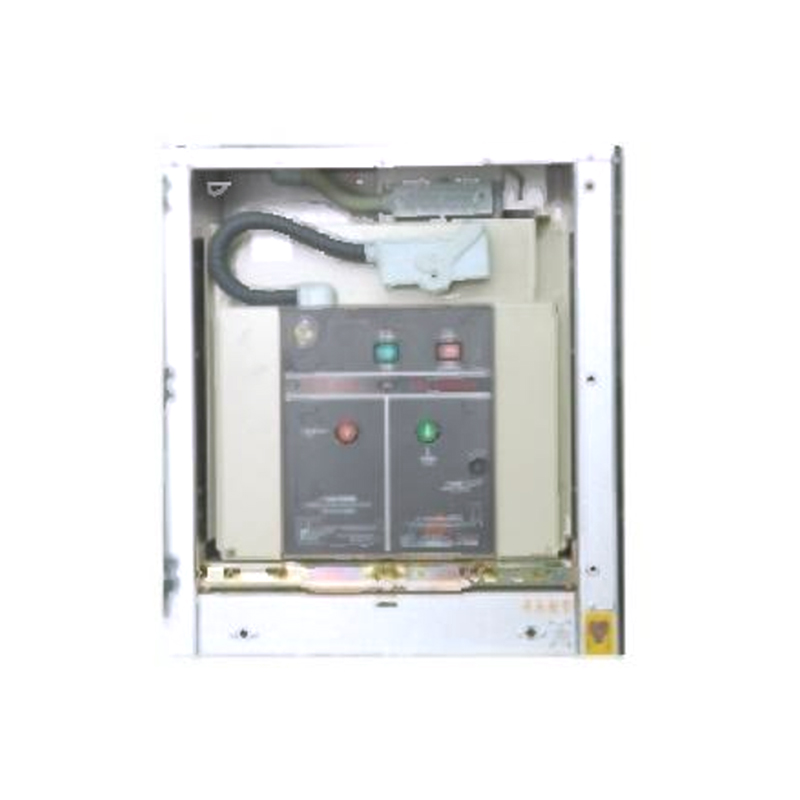 24kV Armored Withdrawable Metal-Enclosed SwitchgearThis KYN28A-24 medium-voltage switchgear uses withdrawable metal-clad construction with a VS1 vacuum circuit breaker and five-prevention interlocking, matching the article's point that such designs keep interrupters accessible for testing. Rated 630–3150A with up to 31.5kA short-time withstand.View Product →
Standards frame the selection. Low-voltage breakers are tested to IEC 60947-2 or UL 489, while medium-voltage breakers and metal-enclosed switchgear follow IEC 62271-100 and IEC 62271-200. The decisive figure is breaking capacity: Icu is the ultimate fault current a breaker can interrupt, and Ics is the share of that current it can interrupt repeatedly and remain in service. A sound specification sizes the rated breaking capacity above the prospective fault current at the installation point, with margin for future network growth.
Procurement risk concentrates in three places. An AC-rated device applied to a DC circuit will not clear the arc. An interrupting rating below the available fault current leaves equipment unable to clear a short circuit safely. And SF6-based equipment, while technically strong, faces tightening F-gas rules in many markets, which pushes buyers to weigh SF6-free constructions for compliance and sustainability targets.
For compact ring-main layouts, SF6 ring main units remain widely deployed, but gas mixtures with lower environmental impact are gaining ground where regulations restrict SF6 use.
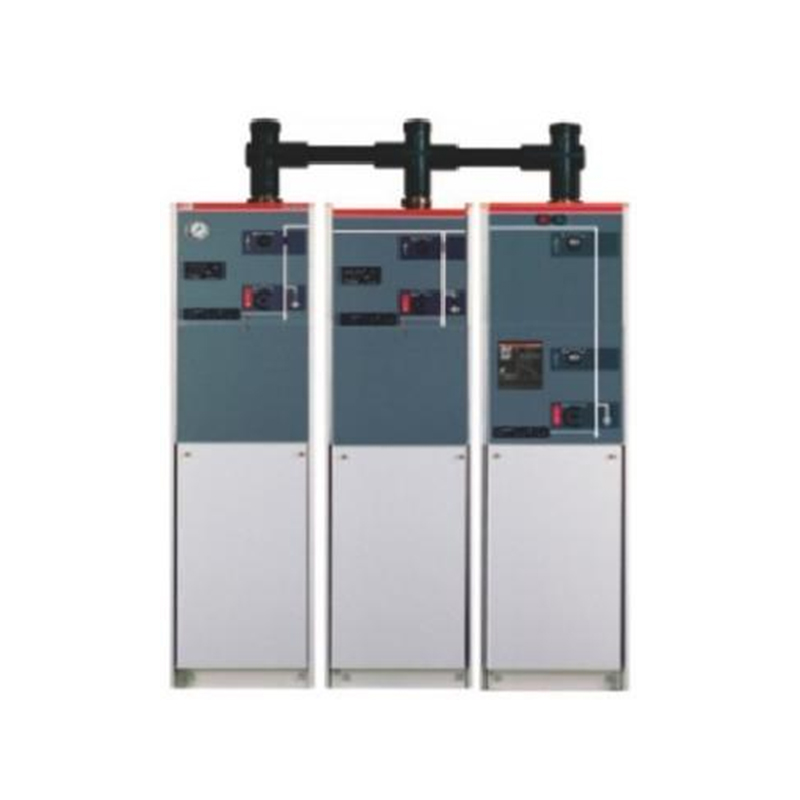 SF6 Gas Insulated Ring Main UnitA fully sealed stainless steel ring main unit with insulated, shielded extendable busbars and modular 2–6 way configurations, suitable for cable-fed urban networks. It illustrates the widely deployed SF6 ring-main option the article contrasts with lower-impact gas mixtures.View Product →
Solid-insulation designs go a step further: the vacuum interrupter quenches the arc while cast epoxy resin replaces gas entirely as the dielectric, removing SF6 handling, leak monitoring and end-of-life gas recovery from the maintenance equation. For projects with strict environmental targets, this construction deserves a place on the shortlist.
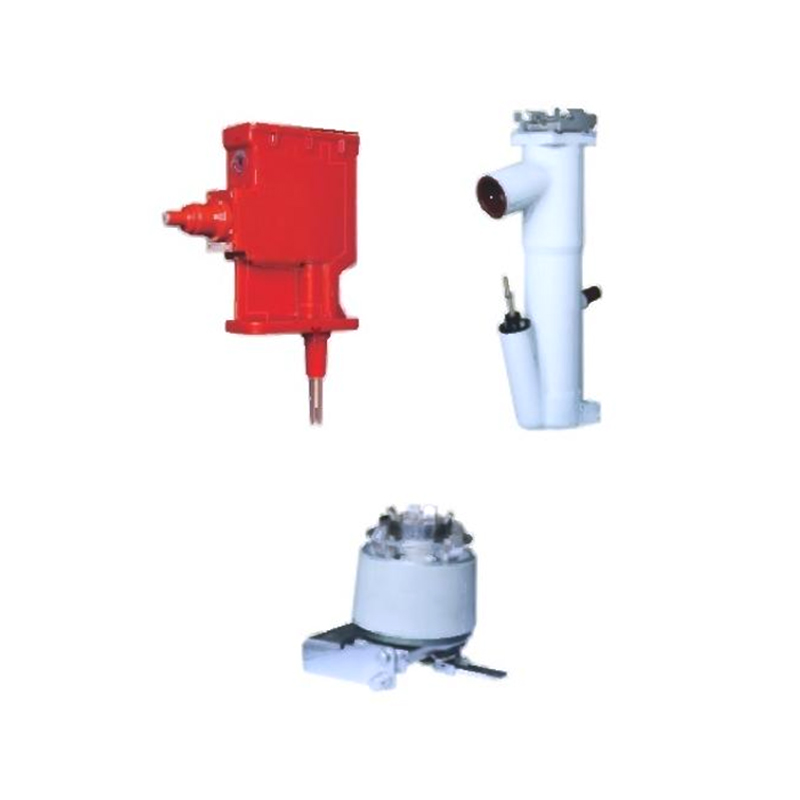 Solid Insulation Intelligent Ring Main UnitThe GTXGN-12 replaces gas insulation with solid composite insulation, using independent per-phase modules and optional FTU controllers for staged upgrades. It fits the article's discussion of SF6-free alternatives, offering up to 12/24kV ratings and 25kA breaking capacity.View Product →
For a closer look at lifetime cost, performance and application trade-offs, this vacuum circuit breaker selection guide covers the details worth comparing before purchase.
Comparing interrupting media, ratings and maintainability is easier within a single catalogue; reviewing a complete high-voltage switchgear lineup side by side makes those trade-offs concrete.
A breaker that arcs only during designed interruption, inside components rated for it, is doing exactly what it was built to do. Evidence of arcing anywhere else is an early warning worth acting on. Treating it that way, and specifying interrupting ratings, media and maintenance access deliberately at purchase, keeps the arc where it belongs.
1.Types of High Voltage Switchgear The main categories of high voltage switchgear include Air-Insula...
View More1. Working Principle Oil-immersed transformers play a pivotal role in modern electrical power system...
View More1. Advantages of Distribution Dry Type Transformers Distribution dry type transformers have become i...
View More
 中文简体
中文简体 русский
 Español
 عربى
عربى