
Get a Quote


Air insulated switchgear (AIS) is the backbone of many medium-voltage distribution systems because it does not rely on special gases or complicated enclosures to work. Atmospheric air provides the electrical clearance between live parts, while conventional circuit breakers, disconnectors, and protection relays handle switching and fault clearing. For engineers and procurement teams, AIS remains attractive because of its transparent design, shorter delivery times, and familiar maintenance procedures. When you open an AIS panel, you can usually see the busbars, insulators, and moving contacts, which makes troubleshooting easier and helps build confidence with on-site staff.
Air insulated switchgear is an assembly of switching devices, busbars, instrument transformers, and protection relays arranged so that air is the main insulating medium between conductors. It is built for indoor and outdoor service across the medium-voltage range, with 12 kV, 24 kV, and 40.5 kV installations being the most common in industrial and utility networks. In indoor AIS, metal-enclosed panels provide segregation and operator protection. In outdoor AIS, open busbars and apparatus are mounted on support structures with clearance distances calculated from standard insulation levels.
For a broader look at switching equipment categories, you can refer to our comprehensive high-voltage switchgear guide.
The spacing between phase conductors and from live parts to earth is fundamental to AIS design. It is determined by the power-frequency withstand voltage and lightning impulse withstand voltage expected for the system. The distances are then adjusted for altitude, pollution level, and the type of insulator used. In coastal or dusty areas, creepage distance is increased and the enclosure is designed to reduce contamination on live surfaces.
Inside a typical medium-voltage AIS panel, the switching function is performed by a vacuum circuit breaker, which offers high interruption capability and long electrical life. Disconnectors provide visible isolation, and earthing switches allow safe access to the cable compartment. Current transformers, voltage transformers, and a protection relay detect overload, short circuit, earth fault, and undervoltage conditions. Modern panels also include surge arresters, cable connections, and mechanical interlocks to enforce the correct operating sequence.
GIS is often mentioned as a space-saving alternative to AIS. In GIS, the conductors are enclosed in earthed metal housings filled with SF6 or another insulating gas, which sharply reduces the footprint. In AIS, air is the dielectric, so the same voltage level requires larger clearances and more physical space. The choice is frequently made on space, project budget, and maintenance capability rather than on electrical performance alone.
| Factor | AIS | GIS |
|---|---|---|
| Insulation medium | Air | SF6 or other gas |
| Footprint | Large | Compact |
| Visual inspection | Easy | Limited |
| Maintenance access | Components accessible | Sealed modules |
| Gas handling | Not required | Required |
| Capital cost position | Lower | Higher |
Many project teams still select AIS because the long-term familiarity and lower maintenance threshold fit local operating capabilities. GIS becomes attractive where land is expensive or the station must be installed in a building, underground, or offshore environment. For the medium-voltage range, both technologies are available from established manufacturers, but the rest of this article focuses on AIS selection and operation.
These limitations do not make AIS outdated. They simply mean the site conditions and operating procedures need to be reviewed before selecting a particular panel family.
Selecting AIS involves more than checking whether the panel fits on the floor. The buyer should confirm the following parameters against the site conditions:
After these parameters are fixed, choose an equipment family that matches the installation. For a 24 kV manufacturing plant, Detong's 24kV armored removable metal-enclosed switchgear offers withdrawable vacuum circuit breakers, clear busbar compartment separation, and a compact indoor footprint.
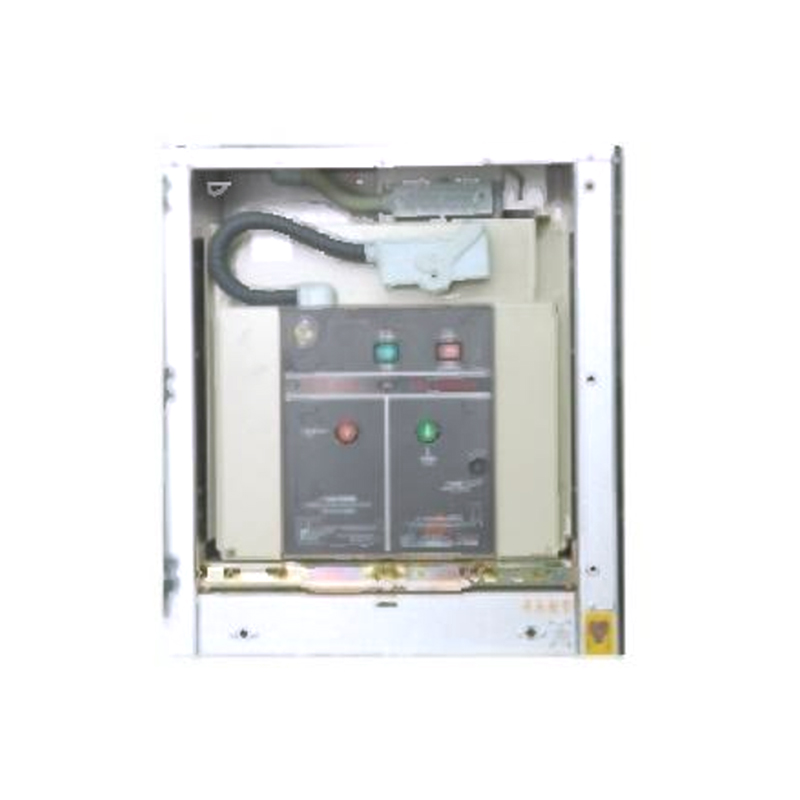 Custom 24kV Armored Removable Metal-Enclosed Switchgear Suppliers, Company - ZheDetong Transformer China wholesale 24kV Armored Removable Metal-Enclosed Switchgear suppliers and 24kV Armored Removable Metal-Enclosed S...View Product →
AIS is applied wherever space, climate, and safety regulations can be managed. Common settings include:
At 40.5 kV, utilities and industrial users often need a robust incoming arrangement. Detong's 40.5kV armored removable AC metal-enclosed switchgear is designed for these duties, combining single or double busbar arrangements with vacuum circuit breakers and enclosed cable connections.
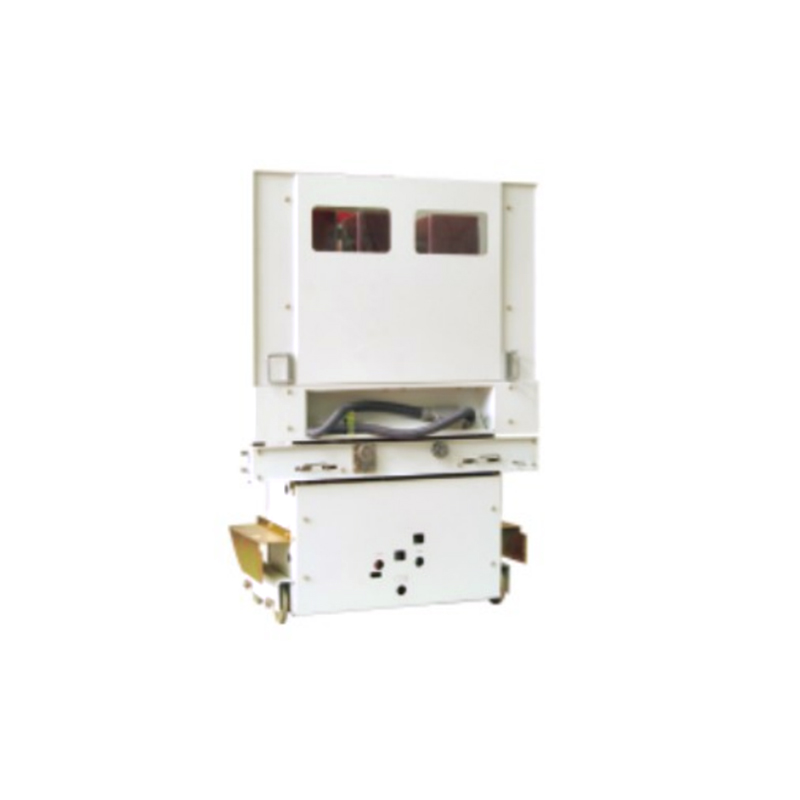 Custom 40.5kV Armored Removable AC Metal-Enclosed Switchgear Suppliers, Company Detong Transformer China wholesale 40.5kV Armored Removable AC Metal-Enclosed Switchgear suppliers and 40.5kV Armored Removable AC Metal-...View Product →
Distribution utilities also use ring main units to feed secondary networks. In these applications, a simple but maintainable design reduces supply interruption risk. Detong's AC metal-enclosed ring network switchgear supports loop feeding, transformer protection, and fault isolation without taking the entire feeder out of service.
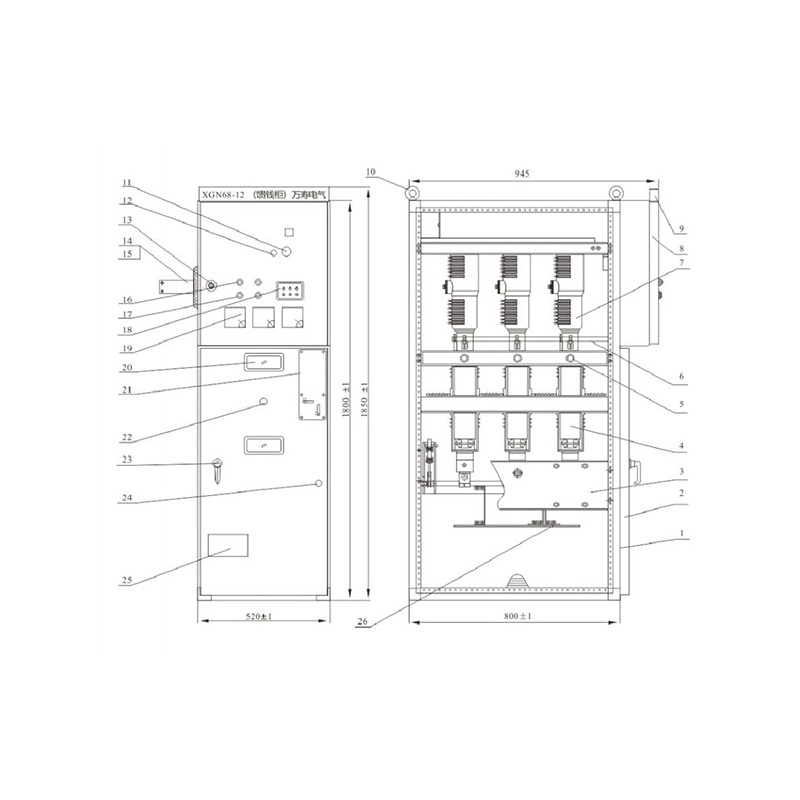 Custom AC Metal-Enclosed Ring Network Switchgear Suppliers, Company - Zhejiang DDetong Transformer China wholesale AC Metal-Enclosed Ring Network Switchgear suppliers and AC Metal-Enclosed Ring Network Switchgear comp...View Product →
Maintenance discipline keeps AIS reliable over a typical 25-30 year service life. The operations team should check:
Because AIS has no sealed gas compartments, staff can perform many checks with the system off or on, as permitted by local safety rules. Keep records of breaker operations, spring-charging time, and motor current. These records help predict wear before a fault occurs.
Air insulated switchgear will continue to be a practical choice for medium-voltage distribution because it balances cost, safety, maintainability, and supplier choice. It is not the most space-efficient option, but it delivers what most substation owners need: clear construction, established operating methods, and lower dependency on specialized gas equipment. If you are planning a 12 kV to 40.5 kV project, start with the electrical parameters, compare AIS and GIS objectively, and select a product family that matches your maintenance capability.
1.Types of High Voltage Switchgear The main categories of high voltage switchgear include Air-Insula...
View More1. Working Principle Oil-immersed transformers play a pivotal role in modern electrical power system...
View More1. Advantages of Distribution Dry Type Transformers Distribution dry type transformers have become i...
View More
 中文简体
中文简体 русский
 Español
 عربى
عربى